Rallying for the Black Vote: Part 1, Or Is It Pandering for the Black Vote
Despite the “one drop,” multiracial, code-switching, garnering barely 1% of the vote, dropping out of a presidential election, freeing criminals, jailing innocents, debacle of a job as denied “border czar,” sleezily creeping up the slippery ladder to success, and the eerie cackling of a goose, what I want to explore with my readers is the so-called “black vote” and what and how it does or does not impact on who gets to be President of the USA.
It’s not like pandering to the African American community is a new thing heading into the 2024 election cycle. Simply put, this type of pandering goes back decades, particularly in areas where African American residents form a majority, and reached a fever pitch during Barack Obama’s presidential campaign with certain other candidates sprinkled in especially during the 20th century. What is most interesting to me in these days and times is how presidential candidates of all stripes will select a few high profile events, places and individuals to openly rally for the black vote.
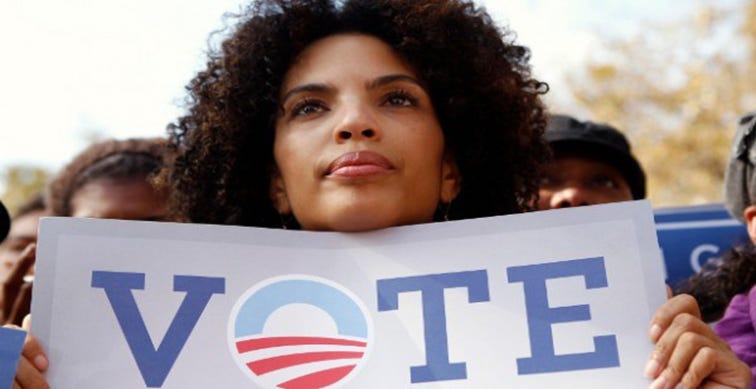
The African American community is barely 15% (some say more) of the populace of the United States. And of course if there was a united voting block of individuals who identify as other than “white” that would indeed have a strong impact on the outcome of any presidential election. But the truth is that this “so-called” melting pot has not been able to merge these groups into a substantial voting block that would make even the slightest dint in the final presidential selection. The issues that swirl around all the other than “white” demographics make them hard pressed to find common ground. In fact, that common ground is hard to determine when you take into account the entire voting populace of the USA. More often than not, the voter votes against their interests rather than for them, as they are summarily divided on what their issues actually are and how any presidential candidate can effectively address them, much less do anything about them once in Office.
African American Suffrage In the USA: A Historical Perspective
The enslaved African American in the USA was denied the right to vote during their captivity for 300 years. After the Emancipation Proclamation of 1863 (which freed up to 4 million enslaved Africans) was declared, the African American “males” voted in such numbers during the Reconstruction (1865-1877), installing individuals into various political offices in such numbers that have yet to be seen since.
During Reconstruction, the Republican Party in the South represented a coalition of African American people who made up the overwhelming majority of Republican voters in the region. Their vote literally set the Post Bellum South on fire, causing their former slave owner such duress they resorted to various methods to dissuade their former slaves from voting. Many southern states in 1865 and 1866 successfully enacted a series of laws known as the “black codes,” which were designed to restrict freed Black peoples’ activity and ensure their availability as a labor force. These “Jim Crow Laws” remained firmly in place for almost a century, but were finally abolished with the passage of the Civil Rights Act of 1964.
After passing the Civil Rights Act (over Andrew Johnson’s veto), Republicans in Congress effectively took control of Reconstruction. The Reconstruction Act of 1867 required southern states to ratify the 14th Amendment—which granted “equal protection” of the Constitution to former enslaved people—and enact universal male suffrage before they could rejoin the Union.
The 15th Amendment, adopted in 1870, guaranteed that a citizen’s right to vote would not be denied “on account of race, color, or previous condition of servitude.” During this period of Radical Reconstruction (1867-1877), Black men won election to southern state governments and even to the U.S. Congress.
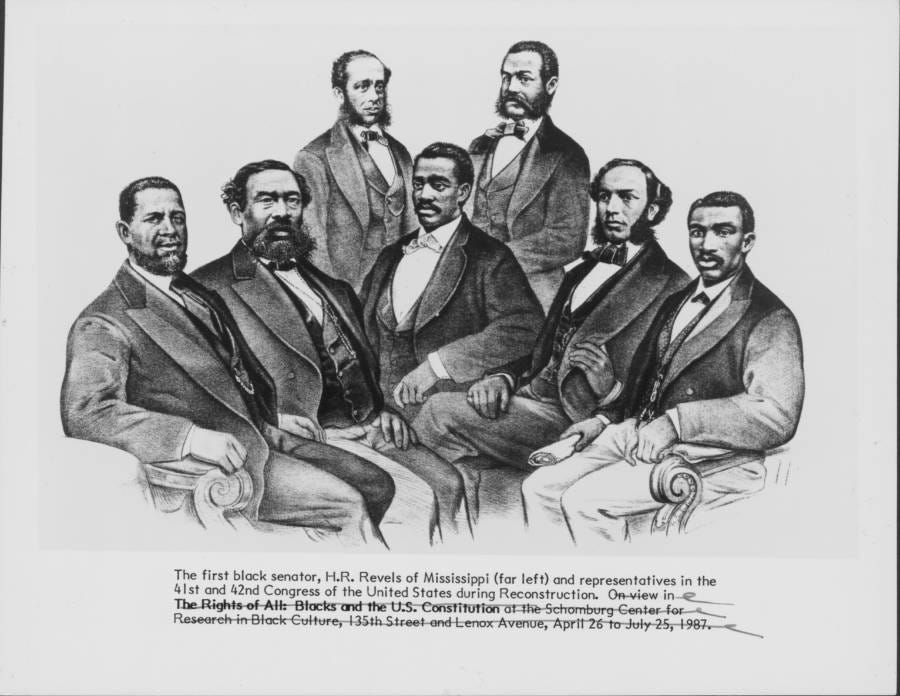
“In less than a decade, however, reactionary forces—including the Ku Klux Klan—would reverse the changes wrought by Radical Reconstruction in a violent backlash that restored white supremacy in the South. https://www.history.com/topics/american-civil-war/reconstruction“
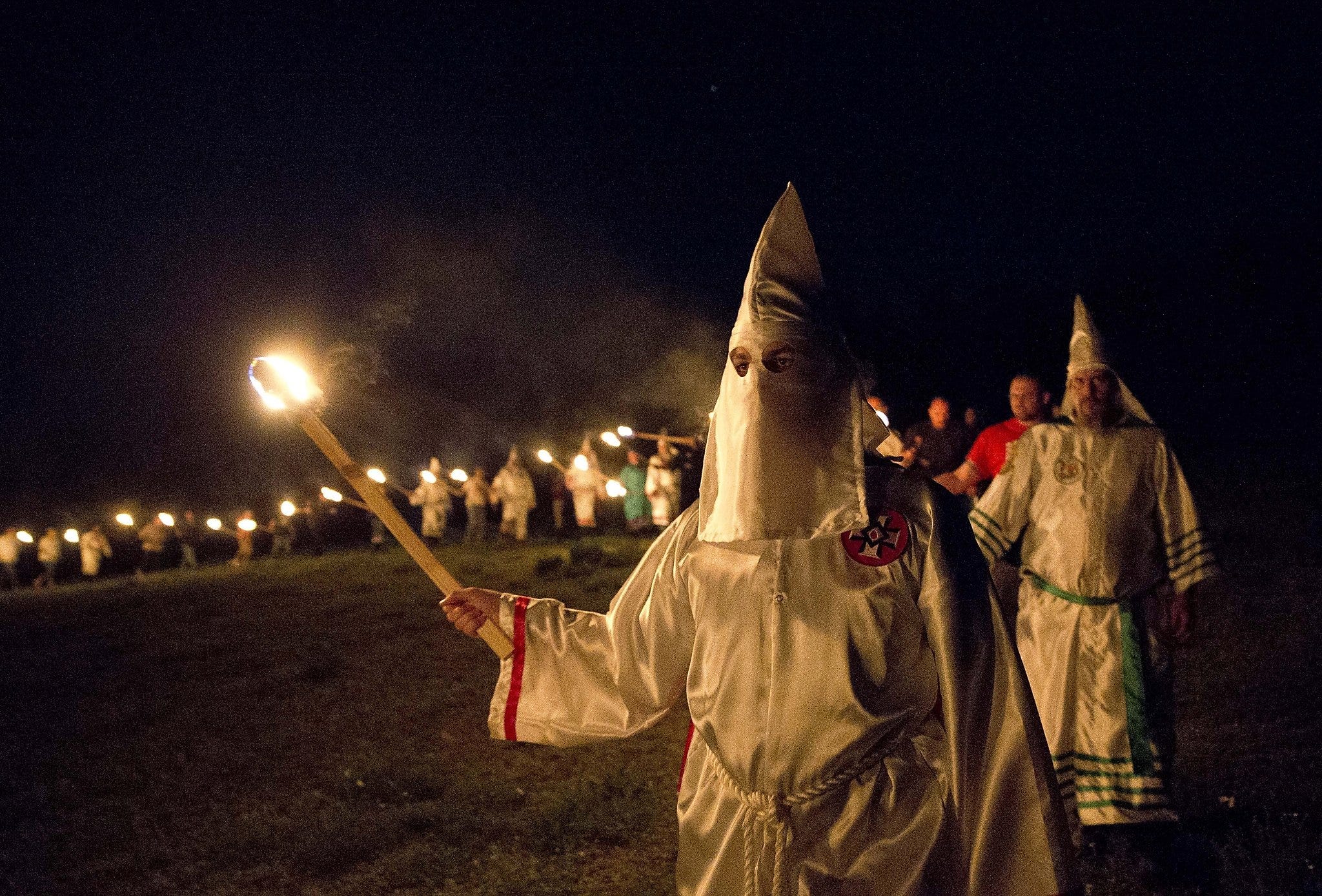
The Ku Klux Klan and other white supremacist organizations targeted local Republican leaders, white and Black, and other African Americans who challenged white authority. Though federal legislation passed during the administration of President Ulysses S. Grant in 1871 took aim at the Klan and others who attempted to interfere with Black suffrage and other political rights, white supremacy gradually reasserted its hold on the South after the early 1870s as support for Reconstruction waned….. By the end of 1876, the entire South was under Democratic control once again.
Freed African Americans Were Primarily Republican
In today’s world it is truly ironic to see the Democratic Party as the party that gets the most votes from African Americans when the Republican Party initially held and support African American suffrage in the Post Bellum South. After a period of decline, white Protestant nativist groups revived the Klan in the early 20th century, burning crosses and staging rallies, parades and marches denouncing immigrants, Catholics, Jews, African Americans and organized labor. Members of the KKK went underground with adherents to its dictates taking several positions in various institutions such as the police and public office to name a few. They were/are so secretive due to their attire which included hooded masks and overt denial of their participation that it has become a commonly held secret that you “never know” who’s a Clansman.
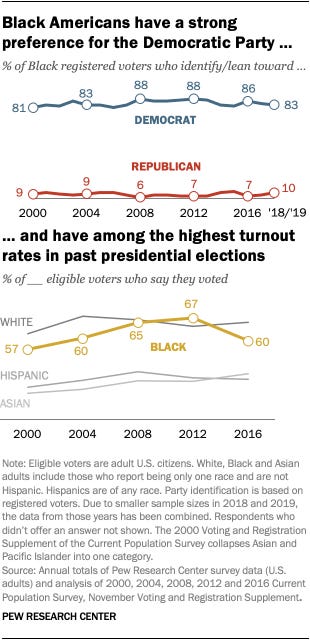
Needless to say, their acts of terrorism that included lynchings, burning of crosses, bombing of homes of African Americans and their white supporters created a significant deterrent for the freedmen to muster the determination to fight against their oppressive and terrorizing tactics. The power of the so-called Black Vote became less and less significant. It took the Civil Rights Movement in the 1960’s to move the bar a little closer to inclusion in the voting process in the USA. Today we see more and more African American civil and social organizations rallying and encouraging the African American to get out “the vote” for candidates that appear to be concerned with their interests. From Ward Leaders, to City Councilmen, to State Representatives, to Senators to finally the POTUS as seen in the election of Barack Hussein Obama.
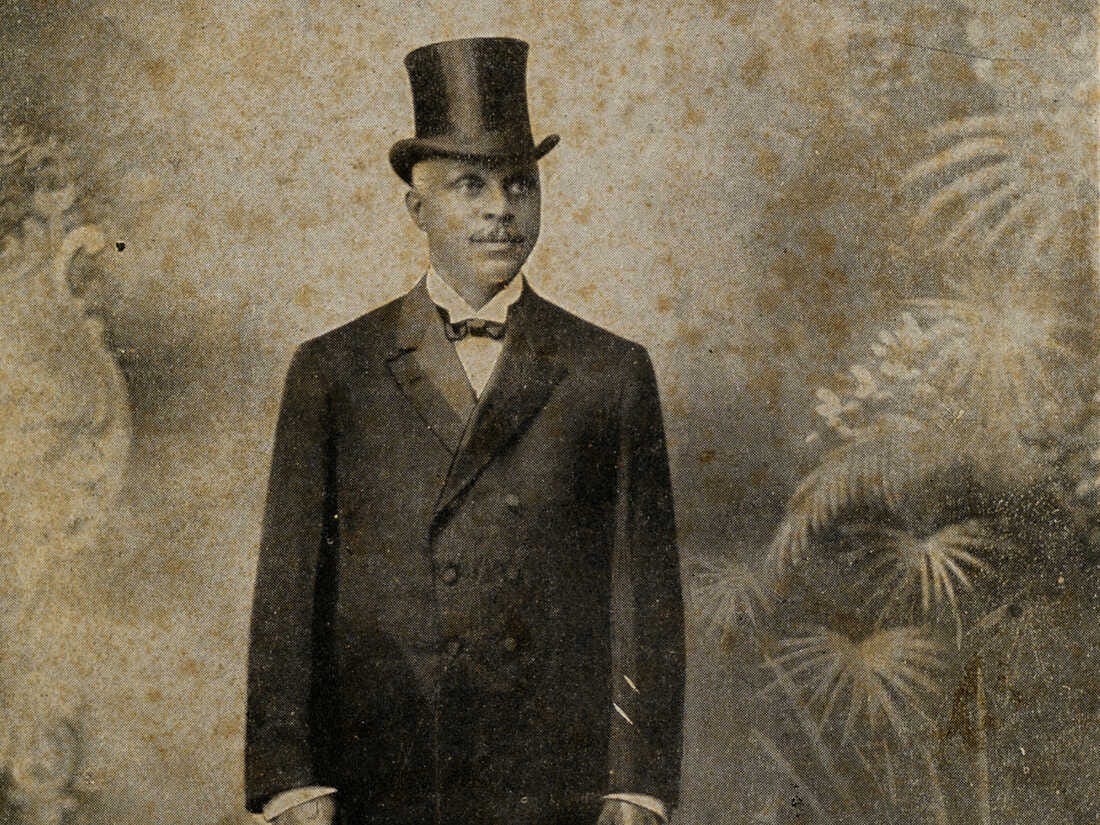
George Edwin Taylor in 1904, Presidential candidate of the National Negro Liberty Party
However, it is still increasingly clear, that the representation of the African American concerns in this country still remain primarily unattended to in a significant way. The collective issues around education, economics, housing, politics, health care and social programs are still highly in need of attention. 13% of voting age African Americans are imprisoned and those with felonies are denied the right to vote either in prison or upon their release.
“In the 15 years between 1865 and 1880, at least 13 states — more than a third of the country’s 38 states — enacted broad felony disenfranchisement laws. The theory was simple — convict them of crimes, strip away the right to vote, imprison them, and lease them out as convict labor and Blacks would be returned to a condition as close to slavery as possible.
What is the result of this history? Black Americans of voting age are more than four times as likely to lose their voting rights than the rest of the adult population. One of every 13 Black adults is disenfranchised. In some states like Virginia, Kentucky, Tennessee, and, until recently, Florida, one in five Blacks have been disenfranchised. In total, 2.2 million Black citizens are banned from voting. Thirty-eight percent of the disenfranchised population in America is Black. https://www.aclu.org/news/voting-rights/racist-roots-denying-incarcerated-people-their-right-vote“
The topic of using prisoners for slave labor is something that this article will not be addressing. But I am sure that the Democratic Presumptive Candidate for 2024 Presidential Election, Ms. Harris is fully aware of how that works. Anyone interested in looking into it a bit further can read an intriguing book called “The New Jim Crow: Mass Incarceration in the Age of Colorblindness” by Michelle Alexander.
Get the African American Voter to Vote
What I do wish to continue with is how the African American vote became something for candidates in the political sphere of influence to rally for. Considering the many hurdles the African American had to overcome to get the right to vote which was enshrined in the 15th Amendment of 1870, and the terrorism that ensued following the Radical Reconstruction Era; we can see that voting rights for African Americans post Civil war had to be fought for and some even died for, in order for their voices to be heard. We often here in the African American community the rallying cry of “You should vote because our ancestors fought and died for the right to vote.”
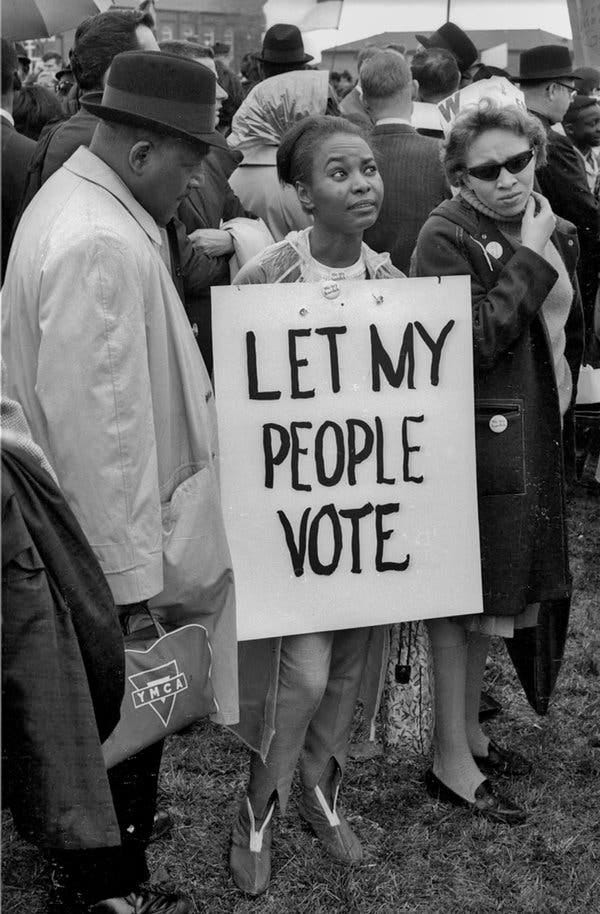
I have to admit here, that I have my own opinion about this rallying cry however this article is not the context in which I wish to convey my opinion on it. I simply want to discuss the why, what and how the African American vote impacts on the electoral process of electing a President in the USA. I want to explore the numerical value of their vote, the power that these numbers have and if these numbers really make a difference in the overall scheme of things. I want to look at the population of the African Americans in this country, the number of them that are of voting age, and how those numbers tip the scale to the right or to the left of the voting machine paradigm as it relates to electing a president. I want to examine the motives, however perceived or contrived, as to why Presidential candidates find it important to pander to the African American voter when in essence they know full well that the African American voting block does not bring the sizable amount of revenue to substantially promote or support a Presidential candidate.
This is reflective of the forerunners to Obama, like Jessie Jackson, and post Obama, Cornell West. With all the African American eligible voters, why were they not able to seal their election that would place them into the white house. My question is then, why do the other Presidential Candidates pander for the African American vote when individuals from the African American demographic were not able to do so, solely on their vote.
List of African-American United States presidential and vice presidential candidates https://en.wikipedia.org/wiki/List_of_African-American_United_States_presidential_and_vice_presidential_candidates
Does the African American voter vote “color” instead of issues? Is the African American vote based on personality, style, smooth talking, promissory notes made by a candidate, notwithstanding their ethnicity? Is the African American voter an informed voter, or are they simply lemmings who vote for the candidate who is pushed in front of them as a viable means to get their interest and concerns attended to? Or is the African American so happy to be allied with those who proport their vote really matters when in fact they know that they are more dependent on donor dollars, more than the African American voting block can ensure? How many African Americans who are eligible to vote, actually vote in numbers that make a difference in outcomes as it relates to determining who will be the next POTUS?
The number of Black Americans eligible to vote for president has reached a record 30 million in 2020, with more than one-third living in nine of the nation’s most competitive states – Arizona, Florida, Georgia, Iowa, Michigan, North Carolina, Ohio, Pennsylvania and Wisconsin – a higher share than the 29% of all U.S. eligible voters who live in these states. Nationwide, Black eligible voters now make up 12.5% of the U.S. electorate, up from 11.5% in 2000. https://www.pewresearch.org/social-trends/fact-sheet/facts-about-the-us-black-population/.
These are some of the questions I wish to explore in this article. At risk of making this too long, I will break it down into several parts as I move through the topic of “Rallying the Black Vote.”
 decacsinc
Recent Comments