Rosalind Peterson of California Skywatch was a certified U.S.D.A. Farm Service Agency Crop Loss Adjustor working in more than ten counties throughout California. She now spearheads a watchdog group that monitors uncontrolled experimental weather modification programs, atmospheric heating and testing programs, and ocean and atmospheric experimental geoengineering programs Peterson is at the forefront of the chemtrail research field and how the unexplained patterns that scar our skies are “causing detrimental human health effects and environmental degradation.”
In this 1-hour plus video exclusive for Prison Planet.tv members, Peterson reveals how she was first spurred to investigate chemtrails after being alerted to them by someone at the Mendocino County Probation Department. Peterson then began to intensely study the phenomenon and note that aircraft producing the trails would circle the county in a clock-like loop, covering the entire area with a cloudy haze in as little as three hours. Peterson cites NASA studies showing that the chemtrails turn into man-made clouds, exacerbating artificial climate change. However, Peterson states her contention that NASA is attempting to cover-up the true nature of chemtrails and convince people that they are a natural phenomenon, a ruse dutifully parroted by top weather and satellite observatories, who as Peterson explains acknowledge the fact that man-made chemtrails are changing the weather yet still label them as natural weather fronts in their public broadcasts.
Peterson shows a map provided by the FAA which reveals how “intra-flights” – mainly of military origin – are causing the chemtrails by flying in loops around counties in flight paths that differ substantially from normal airline trajectories. The flights have no other obvious purpose than to disperse chemtrails because they have no fixed destination, they merely fly around and around in circles.
As proponents of geoengineering like Obama’s science czar John P. Holdren have proposed, blocking sunlight is a primary effect of chemtrailing, and sulfur could be one of the chemicals being dispersed by these trails. As Peterson explains, sulfur has been linked with a host of health problems, which is why California removed it from diesel fuel in the first place.
After studying water quality samples for the state of California stretching back some 30 years, Peterson found that starting from 1990, water sources were all registering unusual spikes in certain chemicals at precisely the same time, namely arsenic, barium, aluminum, calcium, manganese, magnesium, lead and iron. By measuring the spikes in these chemicals in the water supply with similar spikes in these chemicals in air quality samples, Peterson was able to conclude that the cause was airborne and that it had to be coming from the atmosphere. Peterson notes that mixing aluminum and barium creates clouds and that NASA experiments based around this concept were coinciding with the spikes in such chemicals measured in water and air quality samples.
This is an enlightening, detailed and documented explanation of how chemtrailing is being conducted, who is responsible for it and what the consequences are for our health and the environment.
Rosalind Peterson of California Skywatch was a certified U.S.D.A. Farm Service Agency Crop Loss Adjustor working in more than ten counties throughout California. She now spearheads a watchdog group that monitors uncontrolled experimental weather modification programs, atmospheric heating and testing programs, and ocean and atmospheric experimental geoengineering programs Peterson is at the forefront of the chemtrail research field and how the unexplained patterns that scar our skies are “causing detrimental human health effects and environmental degradation.”
In this 1-hour plus video exclusive for Prison Planet.tv members, Peterson reveals how she was first spurred to investigate chemtrails after being alerted to them by someone at the Mendocino County Probation Department. Peterson then began to intensely study the phenomenon and note that aircraft producing the trails would circle the county in a clock-like loop, covering the entire area with a cloudy haze in as little as three hours. Peterson cites NASA studies showing that the chemtrails turn into man-made clouds, exacerbating artificial climate change. However, Peterson states her contention that NASA is attempting to cover-up the true nature of chemtrails and convince people that they are a natural phenomenon, a ruse dutifully parroted by top weather and satellite observatories, who as Peterson explains acknowledge the fact that man-made chemtrails are changing the weather yet still label them as natural weather fronts in their public broadcasts.
Peterson shows a map provided by the FAA which reveals how “intra-flights” – mainly of military origin – are causing the chemtrails by flying in loops around counties in flight paths that differ substantially from normal airline trajectories. The flights have no other obvious purpose than to disperse chemtrails because they have no fixed destination, they merely fly around and around in circles.
As proponents of geoengineering like Obama’s science czar John P. Holdren have proposed, blocking sunlight is a primary effect of chemtrailing, and sulfur could be one of the chemicals being dispersed by these trails. As Peterson explains, sulfur has been linked with a host of health problems, which is why California removed it from diesel fuel in the first place.
After studying water quality samples for the state of California stretching back some 30 years, Peterson found that starting from 1990, water sources were all registering unusual spikes in certain chemicals at precisely the same time, namely arsenic, barium, aluminum, calcium, manganese, magnesium, lead and iron. By measuring the spikes in these chemicals in the water supply with similar spikes in these chemicals in air quality samples, Peterson was able to conclude that the cause was airborne and that it had to be coming from the atmosphere. Peterson notes that mixing aluminum and barium creates clouds and that NASA experiments based around this concept were coinciding with the spikes in such chemicals measured in water and air quality samples.
This is an enlightening, detailed and documented explanation of how chemtrailing is being conducted, who is responsible for it and what the consequences are for our health and the environment.
When the so-called terrorist attack hit Brussels, it made me wonder what message was being conveyed and to whom? This article helps put it into perspective. Call me a conspiracy theorist, I appreciate the title.. you have to think outside of the box. This article speaks loudly, Question: “Your safety? or Your Freedom?”
I heard one announcer say, Europe was on lock down. Imagine that, it made me want to go look at a map and see how far the military lockdown of Europe could stretch. Then another announcer said, the United States was an experiment of the NWO, and it should not be called a new world order but an old world order with a new face.
Think about it, the US an experiment for the NWO, established by well known and well established Freemasons. Illuminati anyone? After reading this article, this song played in my mind, so I am sharing it with you all. It has a message if you listen carefully.
London (AFP) – London mayor Boris Johnson on Monday accused Barack Obama of “hypocrisy” following a report that the US president is heading to Britain next month to make the case for the UK to stay in the European Union.
Barack Obama will visit Britain towards the end of April, around two months before a referendum when the country will decide whether to leave or stay in the 28-country European Union, The Independent on Sunday said (AFP Photo/Mandel Ngan)London mayor Johnson blasts Obama over Brexit
“Coming from Uncle Sam, it is a piece of outrageous and exorbitant hypocrisy,” Johnson, a leading member of the campaign for Britain to leave the EU in a June referendum, wrote in his regular column for the Daily Telegraph.
“Can you imagine the Americans submitting their democracy to the kind of regime that we have in the EU?” he asked, adding: “This is a nation born from its glorious refusal to accept overseas control.”
Johnson went on to point out that the United States does not accept that its own citizens could be subject to the rulings of the International Criminal Court and does not recognize other jurisdictions.
“In urging us to embed ourselves more deeply in the EU’s federalising structures, the Americans are urging us down a course they would never dream of going themselves,” he wrote.
“That is because they are a nation conceived in liberty. They sometimes seem to forget that we are quite fond of liberty, too.”
The Independent newspaper on Sunday reported that Obama, who has already expressed support for Britain’s EU membership, was expected to come to London at the end of April.
The visit would take place around two months before the June 23 referendum in which British voters will decide whether to leave or stay in the 28-country bloc.
A spokeswoman for Prime Minister David Cameron’s Downing Street office on Monday declined to comment on the report.
“Other people will set out their views, the choice for the British people is whether or not they listen to them but then they get to make up their own minds,” she said.
– ‘Special relationship’ –
But on a visit to Brussels, British Foreign Secretary Philip Hammond said it was important to hear from other countries as part of the debate ahead of the vote.
“I think it’s important that we hear from those people in the Anglosphere, not just President Obama but the leaders of Australia, New Zealand, Canada and beyond the Anglosphere, Japanese and Chinese leaders,” he said.
“Let’s just hear what they actually think about their relations with Britain, let’s just hear how much they actually value Britain’s membership of the European Union, just so that the British people are properly informed.”
Obama is heading to Germany in late April to talk trade with Chancellor Angela Merkel and promote US exports at the Hanover industrial technology fair, which takes place April 25-29.
Washington has long backed Britain playing a central role in the EU, the world’s largest economic bloc, and has warned the UK-US “special relationship” could be at risk if it were to leave.
Cameron favours keeping Britain in the EU, following a renegotiation of the country’s relations with Brussels.
Opinion polls indicate that the race is finely balanced, with those who want to remain at 51 percent and those in favour of leaving at 49 percent, according to a survey of polls by the What UK Thinks research project that excludes undecided voters.
Up to 20 percent of voters have said they have not yet made up their minds which way to vote.Source:
False Flag: Belgian Intelligence Was Warned About Exact Bombing Targets (Video)
Saturday, March 26, 2016 11:34
No matter how paranoid or conspiracy minded a person may be, what governments are doing is far worse than most of us can imagine. It is easy to understand however, how “normal” people who have fallen into the trap of actually believing the mainstream media must be nauseated at this point by alternative media outlets purported to be filled with “conspiracy theorists” always crying “False Flag,” after each and every horrific event where there are mass casualties.
I base that assessment on my own nausea of actually BEING one of those alternative media outlets always crying “False Flag” after each and every horrific event where there are mass casualties. As one who studies these events, I roll my own eyes every time I hear the words “false flag,” but the evidence always keeps their attention once I begin following the evidence, so it goes without saying I don’t care for the term, “Conspiracy Theorist.” We conspiracy theorists aren’t crazed, tin foil hat wearing loons, but rather we are people with the conviction to stand up and question the statements of those who are known liars.
First, let’s be clear about what a “False Flag” event means. It does not mean that all the deaths reported are fake. In most alleged recent false flags, the overwhelming majority of carnage appears to be legitimate. Wikipedia defines a “False Flag” event as:
The contemporary term false flag describes covert operations that are designed to deceive in such a way that the operations appear as though they are being carried out by entities, groups, or nations other than those who actually planned and executed them.
In the modern era, false flags are repeatedly being carried out by shadow governments for one primary purpose: To promote the lie that an increasing and far overreaching militaristic police state is advantageous citizens because to achieve safety, all they must do is give up “a little liberty.” Our Founding Fathers were students of history, something modern Americans are the antithesis of. That is why as far back at 200+ years ago, people like Benjamin Franklin once warned us:
“Those who would give up essential Liberty, to purchase a little temporary safety, deserve NEITHER Liberty nor Safety.”
The police state benefits only the political class, not the governed, and as you’ll learn below, there are enough holes in the narrative being told about Belgium to drive a fleet of 18 wheelers through.
When the so-called terrorist attack hit Brussels, it made me wonder what message was being conveyed and to whom? This article helps put it into perspective. Call me a conspiracy theorist, I appreciate the title.. you have to think outside of the box. This article speaks loudly, Question: “Your safety? or Your Freedom?”
I heard one announcer say, Europe was on lock down. Imagine that, it made me want to go look at a map and see how far the military lockdown of Europe could stretch. Then another announcer said, the United States was an experiment of the NWO, and it should not be called a new world order but an old world order with a new face.
Think about it, the US an experiment for the NWO, established by well known and well established Freemasons. Illuminati anyone?
After reading this article, this song played in my mind, so I am sharing it with you all. It has a message if you listen carefully.
London (AFP) – London mayor Boris Johnson on Monday accused Barack Obama of “hypocrisy” following a report that the US president is heading to Britain next month to make the case for the UK to stay in the European Union.
Barack Obama will visit Britain towards the end of April, around two months before a referendum when the country will decide whether to leave or stay in the 28-country European Union, The Independent on Sunday said (AFP Photo/Mandel Ngan)
“Coming from Uncle Sam, it is a piece of outrageous and exorbitant hypocrisy,” Johnson, a leading member of the campaign for Britain to leave the EU in a June referendum, wrote in his regular column for the Daily Telegraph.
“Can you imagine the Americans submitting their democracy to the kind of regime that we have in the EU?” he asked, adding: “This is a nation born from its glorious refusal to accept overseas control.”
Johnson went on to point out that the United States does not accept that its own citizens could be subject to the rulings of the International Criminal Court and does not recognize other jurisdictions.
“In urging us to embed ourselves more deeply in the EU’s federalising structures, the Americans are urging us down a course they would never dream of going themselves,” he wrote.
“That is because they are a nation conceived in liberty. They sometimes seem to forget that we are quite fond of liberty, too.”
The Independent newspaper on Sunday reported that Obama, who has already expressed support for Britain’s EU membership, was expected to come to London at the end of April.
The visit would take place around two months before the June 23 referendum in which British voters will decide whether to leave or stay in the 28-country bloc.
A spokeswoman for Prime Minister David Cameron’s Downing Street office on Monday declined to comment on the report.
“Other people will set out their views, the choice for the British people is whether or not they listen to them but then they get to make up their own minds,” she said.
– ‘Special relationship’ –
But on a visit to Brussels, British Foreign Secretary Philip Hammond said it was important to hear from other countries as part of the debate ahead of the vote.
“I think it’s important that we hear from those people in the Anglosphere, not just President Obama but the leaders of Australia, New Zealand, Canada and beyond the Anglosphere, Japanese and Chinese leaders,” he said.
“Let’s just hear what they actually think about their relations with Britain, let’s just hear how much they actually value Britain’s membership of the European Union, just so that the British people are properly informed.”
Obama is heading to Germany in late April to talk trade with Chancellor Angela Merkel and promote US exports at the Hanover industrial technology fair, which takes place April 25-29.
Washington has long backed Britain playing a central role in the EU, the world’s largest economic bloc, and has warned the UK-US “special relationship” could be at risk if it were to leave.
Cameron favours keeping Britain in the EU, following a renegotiation of the country’s relations with Brussels.
Opinion polls indicate that the race is finely balanced, with those who want to remain at 51 percent and those in favour of leaving at 49 percent, according to a survey of polls by the What UK Thinks research project that excludes undecided voters.
Up to 20 percent of voters have said they have not yet made up their minds which way to vote.
False Flag: Belgian Intelligence Was Warned About Exact Bombing Targets (Video)
Saturday, March 26, 2016 11:34
No matter how paranoid or conspiracy minded a person may be, what governments are doing is far worse than most of us can imagine. It is easy to understand however, how “normal” people who have fallen into the trap of actually believing the mainstream media must be nauseated at this point by alternative media outlets purported to be filled with “conspiracy theorists” always crying “False Flag,” after each and every horrific event where there are mass casualties.
I base that assessment on my own nausea of actually BEING one of those alternative media outlets always crying “False Flag” after each and every horrific event where there are mass casualties. As one who studies these events, I roll my own eyes every time I hear the words “false flag,” but the evidence always keeps their attention once I begin following the evidence, so it goes without saying I don’t care for the term, “Conspiracy Theorist.” We conspiracy theorists aren’t crazed, tin foil hat wearing loons, but rather we are people with the conviction to stand up and question the statements of those who are known liars.
First, let’s be clear about what a “False Flag” event means. It does not mean that all the deaths reported are fake. In most alleged recent false flags, the overwhelming majority of carnage appears to be legitimate. Wikipedia defines a “False Flag” event as:
The contemporary term false flag describes covert operations that are designed to deceive in such a way that the operations appear as though they are being carried out by entities, groups, or nations other than those who actually planned and executed them.
In the modern era, false flags are repeatedly being carried out by shadow governments for one primary purpose: To promote the lie that an increasing and far overreaching militaristic police state is advantageous citizens because to achieve safety, all they must do is give up “a little liberty.” Our Founding Fathers were students of history, something modern Americans are the antithesis of. That is why as far back at 200+ years ago, people like Benjamin Franklin once warned us:
“Those who would give up essential Liberty, to purchase a little temporary safety, deserve NEITHER Liberty nor Safety.”
The police state benefits only the political class, not the governed, and as you’ll learn below, there are enough holes in the narrative being told about Belgium to drive a fleet of 18 wheelers through.
Hillary Wants a Crusade to Defeat Trump’s “Bigotry” – and Leave Her Bankers Alone
by BAR executive editor Glen Ford
“It took the emergence of a grassroots movement against police terror, to wake a critical mass of Black folks to the reality of their condition.”
“If Hillary Clinton can make the general election into a crusade against “bigotry” and “intolerance” as embodied by Donald Trump, she can win with an otherwise issue-less campaign, thus shielding the 1% from harm. Black folks will be happy, imagining the election is all about them. “The great task of independent Black politics is to pry Black folks loose from the Democratic Party’s lethal embrace.” For that, we need a movement in the streets.”
Tuesday’s primary victories will allow Hillary Clinton to get busy planning her “big tent” general election crusade against racism and incivility, in the person of Donald Trump. It will be a corporate Democrat’s dream campaign, with the prospect of the party garnering majority white support for the first time since 1964. Clinton will allow Bernie Sanders’ delegates to craft much of the language of the party platform, in Philadelphia – a meaningless exercise designed to convince the Sandernistas that there is still hope to transform the Democratic Party “from below.” Clinton – who is permanently primed to lie on any subject, at any time, in the interests of the Lords of Capital – may give forked-tongue service to a Sanders-inspired platform, especially if Trump continues his hype on jobs losses to “China” because of “bad deals.” But, Wall Street will have little to worry about. Clinton’s central project will be to build an historic Democratic super-majority by appealing to all “decent” Americans to reject “bigotry” and embrace “fairness” and “tolerance” – by which she will mean nothing more than that they reject Trump.
Such civil rights-sounding rhetoric will signify to Black voters that their faith in the party, and the Clintons, has been bounteously rewarded; that the campaign is really all about them. They will be reassured of the continuity of Barack Obama’s policies under Hillary – as if that were a good thing, and as if Obama and the Clintons were not political triplets all along, rooted in the same right-wing of the party.
When Hillary Clinton is sworn in, there will be no Great Black Hajj [3] of millions to the Washington Mall, as in 2009 – no dizzying euphoria. But, the effect of a huge Democratic triumph over the Trump Monster could reproduce much the same disastrous Black political passivity as in the early Obama years, when folks thought they were on track to the Promised Land. Despite having been set back as much as 30 years by the Great Recession, in terms of their relative position to whites, African Americans clung to the delusion that things had never been so good, simply because there was a Black family in the White House.
“The effect of a huge Democratic triumph over the Trump Monster could reproduce much the same disastrous Black political passivity as in the early Obama years.”
It took the emergence of a grassroots movement against police terror, under the general heading of Black Lives Matter, to wake a critical mass of Black folks to the reality of their condition. For two generations, the dead, hegemonic weight of the Democratic Party had subverted and suffocated the Black Radical Tradition, diverting all Black political energies into a corporate dominated electoral enclosure. However, no sooner had the “Ferguson movement” (as many initially called it) gained traction, than it was partially co-opted by young opportunists with corporate ambitions. Campaign Zero immediately set out to become a player in the Democratic Party. (Its twittering star, DeRay McKesson, is currently running for mayor of Baltimore.) #Black Lives Matter was endorsed by the Democratic National Committee, with its founders mentioned by name. However, Alicia Garza, Patrisse Cullors and Opal Tometi, rejected the endorsement [4]. “The Democratic Party, like the Republican and all political parties, have historically attempted to control or contain Black people’s efforts to liberate ourselves,” they said. “True change requires real struggle, and that struggle will be in the streets and led by the people, not by a political party.”
In a caricature of confrontation with power, activists held two cozy “chats” [5] with Hillary Clinton, in which they made no substantive demands. Clinton easily dominated the discussions, and succeeded in projecting herself as a stern but sincere supporter of the movement – an undeserved reputation that would benefit her presidential campaign.
The brazenly opportunist Campaign Zero group and the Garza-Cullors-Tometi network dickered with [6] the Democratic National Committee over campaign events. Campaign Zero agreed to collaborate with the Democrats on a televised town hall-type event on racial justice issues. The #Black Lives Matter network preferred a televised debate. Either way, participation in such projects relegates the collaborators to the status of annexes of the party, like MoveOn.org.
“Being controlled by the two-party system is hugely problematic and is disempowering and oppressive to black people.”
It was refreshing, and heartening, therefore, to hear another founding member of #Black Lives Matter explain why the network will not endorse any presidential candidate. Prof. Melina Abdullah, chair of the Department of Pan-African Studies at California State University, Los Angeles, told Democracy Now! viewers that “neither Bernie Sanders or Hillary Clinton have a strong command of the particular issues related to race in the specificity of black oppression.” (Actually, a more knowledgeable Democratic Party leader would be, if anything, even more dangerous.) More definitively, Prof. Abdullah said “being controlled by the two-party system is hugely problematic and is disempowering and oppressive to black people.” The movement needs to “think about what democracy is,” and “we need to really kind of redefine what that means and break away from this notion that the only way of being democratic is engaging in electoral politics.” The #Black Lives Matter Network “is pushing the real revolution,” she said.
Revolutionary movements – movements of any kind – require the formulation of demands. “We need to develop a plan that really deals with the specifics of blackness – black jobs, black employability, moving toward black wealth,” said Abdullah, the political scientist.
Hillary Clinton hopes to build a super-party this election season, packed to overflowing with “moderate” Republicans fleeing the taint of Donald Trump, who will bring their otherwise conservative politics with them into the Democratic “big tent” – an ideal infusion to reinforce Hillary Clinton’s (and Barack Obama’s) corporate wing of the party. Black folks will emerge from this electoral process even more marginal to party policy than before. But, most will not realize it.
The great task of independent Black politics is to pry Black folks loose from the Democratic Party’s lethal embrace. For that, you need a movement that is armed with proper demands. The #Black Lives Matter network is not there, yet, but at least some members are aware of the general path that must be taken.
Hillary Wants a Crusade to Defeat Trump’s “Bigotry” – and Leave Her Bankers Alone
by BAR executive editor Glen Ford
“It took the emergence of a grassroots movement against police terror, to wake a critical mass of Black folks to the reality of their condition.”
“If Hillary Clinton can make the general election into a crusade against “bigotry” and “intolerance” as embodied by Donald Trump, she can win with an otherwise issue-less campaign, thus shielding the 1% from harm. Black folks will be happy, imagining the election is all about them. “The great task of independent Black politics is to pry Black folks loose from the Democratic Party’s lethal embrace.” For that, we need a movement in the streets.”
Tuesday’s primary victories will allow Hillary Clinton to get busy planning her “big tent” general election crusade against racism and incivility, in the person of Donald Trump. It will be a corporate Democrat’s dream campaign, with the prospect of the party garnering majority white support for the first time since 1964. Clinton will allow Bernie Sanders’ delegates to craft much of the language of the party platform, in Philadelphia – a meaningless exercise designed to convince the Sandernistas that there is still hope to transform the Democratic Party “from below.” Clinton – who is permanently primed to lie on any subject, at any time, in the interests of the Lords of Capital – may give forked-tongue service to a Sanders-inspired platform, especially if Trump continues his hype on jobs losses to “China” because of “bad deals.” But, Wall Street will have little to worry about. Clinton’s central project will be to build an historic Democratic super-majority by appealing to all “decent” Americans to reject “bigotry” and embrace “fairness” and “tolerance” – by which she will mean nothing more than that they reject Trump.
Such civil rights-sounding rhetoric will signify to Black voters that their faith in the party, and the Clintons, has been bounteously rewarded; that the campaign is really all about them. They will be reassured of the continuity of Barack Obama’s policies under Hillary – as if that were a good thing, and as if Obama and the Clintons were not political triplets all along, rooted in the same right-wing of the party.
When Hillary Clinton is sworn in, there will be no Great Black Hajj [3] of millions to the Washington Mall, as in 2009 – no dizzying euphoria. But, the effect of a huge Democratic triumph over the Trump Monster could reproduce much the same disastrous Black political passivity as in the early Obama years, when folks thought they were on track to the Promised Land. Despite having been set back as much as 30 years by the Great Recession, in terms of their relative position to whites, African Americans clung to the delusion that things had never been so good, simply because there was a Black family in the White House.
“The effect of a huge Democratic triumph over the Trump Monster could reproduce much the same disastrous Black political passivity as in the early Obama years.”
It took the emergence of a grassroots movement against police terror, under the general heading of Black Lives Matter, to wake a critical mass of Black folks to the reality of their condition. For two generations, the dead, hegemonic weight of the Democratic Party had subverted and suffocated the Black Radical Tradition, diverting all Black political energies into a corporate dominated electoral enclosure. However, no sooner had the “Ferguson movement” (as many initially called it) gained traction, than it was partially co-opted by young opportunists with corporate ambitions. Campaign Zero immediately set out to become a player in the Democratic Party. (Its twittering star, DeRay McKesson, is currently running for mayor of Baltimore.) #Black Lives Matter was endorsed by the Democratic National Committee, with its founders mentioned by name. However, Alicia Garza, Patrisse Cullors and Opal Tometi, rejected the endorsement [4]. “The Democratic Party, like the Republican and all political parties, have historically attempted to control or contain Black people’s efforts to liberate ourselves,” they said. “True change requires real struggle, and that struggle will be in the streets and led by the people, not by a political party.”
In a caricature of confrontation with power, activists held two cozy “chats” [5] with Hillary Clinton, in which they made no substantive demands. Clinton easily dominated the discussions, and succeeded in projecting herself as a stern but sincere supporter of the movement – an undeserved reputation that would benefit her presidential campaign.
The brazenly opportunist Campaign Zero group and the Garza-Cullors-Tometi network dickered with [6] the Democratic National Committee over campaign events. Campaign Zero agreed to collaborate with the Democrats on a televised town hall-type event on racial justice issues. The #Black Lives Matter network preferred a televised debate. Either way, participation in such projects relegates the collaborators to the status of annexes of the party, like MoveOn.org.
“Being controlled by the two-party system is hugely problematic and is disempowering and oppressive to black people.”
It was refreshing, and heartening, therefore, to hear another founding member of #Black Lives Matter explain why the network will not endorse any presidential candidate. Prof. Melina Abdullah, chair of the Department of Pan-African Studies at California State University, Los Angeles, told Democracy Now! viewers that “neither Bernie Sanders or Hillary Clinton have a strong command of the particular issues related to race in the specificity of black oppression.” (Actually, a more knowledgeable Democratic Party leader would be, if anything, even more dangerous.) More definitively, Prof. Abdullah said “being controlled by the two-party system is hugely problematic and is disempowering and oppressive to black people.” The movement needs to “think about what democracy is,” and “we need to really kind of redefine what that means and break away from this notion that the only way of being democratic is engaging in electoral politics.” The #Black Lives Matter Network “is pushing the real revolution,” she said.
Revolutionary movements – movements of any kind – require the formulation of demands. “We need to develop a plan that really deals with the specifics of blackness – black jobs, black employability, moving toward black wealth,” said Abdullah, the political scientist.
Hillary Clinton hopes to build a super-party this election season, packed to overflowing with “moderate” Republicans fleeing the taint of Donald Trump, who will bring their otherwise conservative politics with them into the Democratic “big tent” – an ideal infusion to reinforce Hillary Clinton’s (and Barack Obama’s) corporate wing of the party. Black folks will emerge from this electoral process even more marginal to party policy than before. But, most will not realize it.
The great task of independent Black politics is to pry Black folks loose from the Democratic Party’s lethal embrace. For that, you need a movement that is armed with proper demands. The #Black Lives Matter network is not there, yet, but at least some members are aware of the general path that must be taken.
After sharing the video on how Fast Food has changed the world, it seems only fitting to share “The Dark Side of the All-American Meal with my readers….. Watch the video, read the book.
Fast Food Nation: The Dark Side of the All-American Meal (2001) is a book by investigative journalist Eric Schlosser that examines the local and global influence of the United States fast food industry.
First serialized by Rolling Stone in 1999, the book has drawn comparisons to Upton Sinclair’s classic muckraking novel The Jungle. The book was adapted into a film of the same name, directed by Richard Linklater.
The book is divided into two sections, “The American Way,” which interrogates the beginnings of the Fast Food Nation within the context of post-World War II America; and “Meat and Potatoes,” which examines the specific mechanizations of the fast-food industry, including the chemical flavoring of the food, the production of cattle and chickens, the working conditions of beef industry, the dangers of eating meat, and the global context of fast food as an American cultural export.
Fast Food Nation opens with discussion of Carl N. Karcher and the McDonalds brothers, examining their roles as pioneers of the fast-food industry in southern California. This discussion is followed by an examination of Ray Kroc and Walt Disney’s complicated relationship as well as each man’s rise to fame. This chapter also considers the intricate, profitable methods of advertising to children. Next, Schlosser visits Colorado Springs, CO and investigates the life and working conditions of the typical fast-food industry employee: fast-food restaurants employ the highest rate of low-wage workers, have among the highest turnover rates, and pay minimum wage to a higher proportion of its employees than any other American industry.
The second section of the text begins with a discussion of the chemical components that make the food taste so good. Schlosser follows this with a discussion of the life of a typical rancher, considering the difficulties presented to the agriculture world in a new economy. Schlosser is perhaps most provocative when he critiques the meatpacking industry, which he tags as the most dangerous job in America. Moreover, the meat produced by slaughterhouses has become exponentially more hazardous since the centralization of the industry: the way cattle are raised, slaughtered, and processed provides an ideal setting for E coli to spread. Additionally, working conditions continue to grow worse. In the final chapter, Schlosser considers how fast food has matured as an American cultural export following the Cold War: the collapse of Soviet Communism has allowed the mass spread of American goods and services, especially fast food. As a result, the rest of the world is catching up with America’s rising obesity rates.
The book continues with an account of the evolution of fast food and how it has coincided with the advent of the automobile. Schlosser explains the transformation from countless independent restaurants to a few uniform franchises. “The extraordinary growth of the fast food industry has been driven by fundamental changes in American society… During that period, women entered the workforce in record numbers, often motivated less by a feminist perspective than by a need to pay the bills. In 1975, about one-third of American mothers with young children worked outside the home; today almost two-thirds of such mothers are employed. As the sociologists Cameron Lynne Macdonald and Carmen Sirianni have noted, the entry of so many women into the workforce has greatly increased demand for the types of services that housewives traditionally perform: cooking, cleaning, and child care. A generation ago, three-quarters of the money used to buy food in the United States was spent to prepare meals at home. Today about half of the money used to buy food is spent at restaurants – mainly at fast food restaurants.”
Regarding the topic of child-targeted marketing, Schlosser explains how the McDonald’s Corporation modeled its marketing tactics on The Walt Disney Company, which inspired the creation of advertising icons such as Ronald McDonald and his sidekicks. Marketing executives intended that this marketing shift would result not only in attracting children, but their parents and grandparents as well. More importantly, the tactic would instill brand loyalty that would persist through adulthood through nostalgic associations to McDonald’s. Schlosser also discusses the tactic’s ills: the exploitation of children’s naïveté and trusting nature.
In marketing to children, Schlosser suggests, corporations have infiltrated schools through sponsorship and quid pro quo. He sees that reductions in corporate taxation have come at the expense of school funding, thereby presenting many corporations with the opportunity for sponsorship with those same schools. According to his sources, 80% of sponsored textbooks contain material that is biased in favor of the sponsors, and 30% of high schools offer fast foods in their cafeterias.
After sharing the video on how Fast Food has changed the world, it seems only fitting to share “The Dark Side of the All-American Meal with my readers….. Watch the video, read the book.
(Fast Food Nation: The Dark Side of the All-American Meal (2001) is a book by investigative journalistEric Schlosser that examines the local and global influence of the United States fast food industry.[3])
Fast Food Nation: The Dark Side of the All-American Meal (2001) is a book by investigative journalist Eric Schlosser that examines the local and global influence of the United States fast food industry.
First serialized by Rolling Stone in 1999, the book has drawn comparisons to Upton Sinclair’s classic muckraking novel The Jungle. The book was adapted into a film of the same name, directed by Richard Linklater.
The book is divided into two sections, “The American Way,” which interrogates the beginnings of the Fast Food Nation within the context of post-World War II America; and “Meat and Potatoes,” which examines the specific mechanizations of the fast-food industry, including the chemical flavoring of the food, the production of cattle and chickens, the working conditions of beef industry, the dangers of eating meat, and the global context of fast food as an American cultural export.
Fast Food Nation opens with discussion of Carl N. Karcher and the McDonalds brothers, examining their roles as pioneers of the fast-food industry in southern California. This discussion is followed by an examination of Ray Kroc and Walt Disney’s complicated relationship as well as each man’s rise to fame. This chapter also considers the intricate, profitable methods of advertising to children. Next, Schlosser visits Colorado Springs, CO and investigates the life and working conditions of the typical fast-food industry employee: fast-food restaurants employ the highest rate of low-wage workers, have among the highest turnover rates, and pay minimum wage to a higher proportion of its employees than any other American industry.
The second section of the text begins with a discussion of the chemical components that make the food taste so good. Schlosser follows this with a discussion of the life of a typical rancher, considering the difficulties presented to the agriculture world in a new economy. Schlosser is perhaps most provocative when he critiques the meatpacking industry, which he tags as the most dangerous job in America. Moreover, the meat produced by slaughterhouses has become exponentially more hazardous since the centralization of the industry: the way cattle are raised, slaughtered, and processed provides an ideal setting for E coli to spread. Additionally, working conditions continue to grow worse. In the final chapter, Schlosser considers how fast food has matured as an American cultural export following the Cold War: the collapse of Soviet Communism has allowed the mass spread of American goods and services, especially fast food. As a result, the rest of the world is catching up with America’s rising obesity rates.
The book continues with an account of the evolution of fast food and how it has coincided with the advent of the automobile. Schlosser explains the transformation from countless independent restaurants to a few uniform franchises. “The extraordinary growth of the fast food industry has been driven by fundamental changes in American society… During that period, women entered the workforce in record numbers, often motivated less by a feminist perspective than by a need to pay the bills. In 1975, about one-third of American mothers with young children worked outside the home; today almost two-thirds of such mothers are employed. As the sociologists Cameron Lynne Macdonald and Carmen Sirianni have noted, the entry of so many women into the workforce has greatly increased demand for the types of services that housewives traditionally perform: cooking, cleaning, and child care. A generation ago, three-quarters of the money used to buy food in the United States was spent to prepare meals at home. Today about half of the money used to buy food is spent at restaurants – mainly at fast food restaurants.”
Regarding the topic of child-targeted marketing, Schlosser explains how the McDonald’s Corporation modeled its marketing tactics on The Walt Disney Company, which inspired the creation of advertising icons such as Ronald McDonald and his sidekicks. Marketing executives intended that this marketing shift would result not only in attracting children, but their parents and grandparents as well. More importantly, the tactic would instill brand loyalty that would persist through adulthood through nostalgic associations to McDonald’s. Schlosser also discusses the tactic’s ills: the exploitation of children’s naïveté and trusting nature.
In marketing to children, Schlosser suggests, corporations have infiltrated schools through sponsorship and quid pro quo. He sees that reductions in corporate taxation have come at the expense of school funding, thereby presenting many corporations with the opportunity for sponsorship with those same schools. According to his sources, 80% of sponsored textbooks contain material that is biased in favor of the sponsors, and 30% of high schools offer fast foods in their cafeterias.
NB COMMENTARY: I really wanted to NOT be in this Beyoncé Madness, but the irony of it all is to see folks being offended by her antics to the point of calling it racist when in fact, if they took the time to read the lyrics, they would see the song is all about Beyoncé getting hers. With a smattering of some retorts against “whatever.” The fact that she even uses this “so-called” Black Panther imagery, which in and of itself is a smack in the face of the movement, a downgrade at best in its presentation and surely not militant at all; is amazing to me. The fact that folks are getting hot under the collar over it is outright laughable. Then, on the other hand, you have these drones who support and even consider this “show” as something meaningful or even intrinsically an acknowledgment of her “Blackness.” Now I am ROFLMAO and sadly, there are many in that camp as well.
In it’s simplicity it barely shows any aggression or hatred or anything against the police. It’s a bunch of scantly clad women, fist balled up, dancing with Beyoncé in formation. The directive?? Work hard, grind hard, own it so you can “have the paper.” Which none of that was what the BPP Movement was about but surely a capitalistic approach to success.
These folks give money to these movements (Black Lives Matter which is suspect on its face), and bail protesters out of jail, but none of them will give up their way of life to join the Movement on the Real, and that’s the point. If twirling her ass, and rocking her crotch gets her money, that is what she will do, she certainly is not on the front lines of the conscious movement or on the front lines of the progressive movement.
Being part of the conscious or progressive movement would be detrimental to her power bank account cause folks would stop spending money on those things that do nothing for their progress and that would mean to stop buying her and her husbands stuff. Her lyrics were more about, “this is what you get for your money, I work hard for it, I slay for it, and see, what your money did for me??? I am at the Super Bowl.”
It’s all about her and will always be about her, and folks need to get real cause she ain’t doing nothing against her handlers who are all “albinos.” LOL Check out the lyrics if you haven’t already. Click Here for the Lyrics
Assata Shakur Speaks
SOURCE: http://blackpantheressproject.tumblr.com/ Although the Black Panther Party (BPP) revolutionized the condition of Black people and communities in the 1960s, sexism in the group silenced the voices of Black women to promote a Black nationalist agenda that became conflated with the idea of preserving Black masculinity. This project aims to examine how and why this brand of racialized sexism in the Black Panther Party operated in the group, and to shed light on some of the silenced and erased the narratives about radical Black womanhood.
Regina Jennings, a Black woman who joined the Black Panther Party as a teenager, reflects about her experience with sexism in the group. She recounts a particularly difficult encounter with a captain who romantically pursued her. When she rejected his advances, she explains, “he made my life miserable. He gave me ridiculous orders. He shunned me. He found fault in my performance” (262). Ultimately, he had her transferred to a different branch of the organization, even though that meant completely disrupting her way of life. Jennings brought the incidences to the Central Committee’s attention, but the all-male panel accused her of white, bourgeois behaviors and values.
In spite of this situation, Jennings takes great pains not to demonize the entire group. While she and other women in the Black Panther Party confronted this form of sexism and misogyny, they also received a lot of support from Black men. Some Black men even defended Jennings when she complained of the sexual harassment, even when that meant that other men would shame them or call them emasculated. Jennings attributes these circumstances with a lack of knowledge or experience with power. “Black men, who had been too long without some form of power, lacked the background to understand and rework their double standard toward the female cadre” (263), she contends, demonstrating that oppression not only works to degrade a group, but also impels that group to internalize a set of power structures and enact oppression upon others. In spite of her claims, she emphasizes that this type of sexism should not be excused but rather understood. Jennings celebrates the love present in the BPP, forgiving the Party for the conditions that made it imperfect while honoring the uplift it achieved.
“I want you to know how much they perfectly loved you,” she clarifies in reference to those who dedicated their energies to Black communities. “I want you to know that they were willing to die for you” (264).
Kathleen Cleaver was the first female member of the Black Panther Party’s decision making body. In this interview, Cleaver challenges Euro-centric standards of beauty while expressing the BPP’s stance on self-love, and Black revival through celebrating different images of Blackness. She really does make a case for “the personal is political”!
What about Feminism?
Although Black women have not always identified with labels such as “feminist,” Black women have advocated for women’s issues as early as the 19th century. Black women have fought for economic justice/equality, against racism, against sexism, and against imperialism throughout U.S. history. In fact, the first wave white feminists learned much of their organizing and political strategies from Black, female abolitionists.
The late 1960s and the 1970s did witness an increasing number of Black women articulating their experience around the words “feminist” or “feminism,” but also a number of Black women challenging the structure of feminist movements. The Women’s Liberation Movement (WLM) took the nation by storm, voicing many women’s grievances, but it did not appeal to many Black women and women of color who interpreted the movement’s work as an agenda that principally furthered white, upper-class women’s issues. Furthermore, many Black women considered their involvement in mixed gender spaces more pressing because they identified more with their male counterparts’ struggles than with the affluent white women’s problems. Kathleen Cleaver explained this phenomenon:
“The problems of Black women and the problems of White women are so completely diverse they cannot possibly be solved in the same type of organization nor met by the same type of activity… [but] I can understand how a White woman cannot relate to a White man.”
This racial solidarity in some ways led some Black women in mixed gender groups to tolerate oppressive ideologies to avoid division, or to subscribe to certain roles. In the pamphlet, “Panther Sisters on Women’s Liberation,” some women insisted that “Black men understand that their manhood is not dependent on keeping Black women subordinate to them,” but also claimed that because “our men have been sort of castrated,” women had to avoid taking up too much space in leadership so that Black men would not have any “fear of women dominating the whole political scene”. That kind of admonition to other Black women invokes ideas about pathologized matriarchy. Other women in the BPP adopted more masculine roles in order to be taken more seriously. Assata Shakur confessed, “You had to develop this whole arrogant kind of macho style in order to be heard… We were just involved in those day to day battles for respect in the Black Panther Party,” revealing the complications in negotiating one’s gender identity and the implications of said gender, even in anti-oppression organizations.
Although the climate of the BPP proved difficult to articulate in terms of gender politics, it was due to Black women’s participation in mixed gender groups and organizations (as opposed to the tendencies of some white, radical feminist groups who championed separatism), that Black women could interrogate the sexist and misogynistic ideologies present in anti-oppression organizations. Various BPP chapters even collaborated with the Women’s Liberation Movement at times, such as in 1969 when WLM members protested the cruel treatment of imprisoned Panther women.
Black women’s presence in the BPP forced men to reconsider their sexist assumptions. Even Party leaders like Eldridge Cleaver shifted positions. In 1968, Cleaver limited Black women’s political potential only to “pussy power,” or, the idea that Black women should withhold sex from Black men until he was ready to “pick up a gun” and embrace his own activism. In contrast, a year later, responding the cruel treatment of Black Panther women in prisons, Cleaver asserted that “if we want to go around and call ourselves a vanguard organization, then we’ve got to be… the vanguard also in the area of women’s liberation, and set an example in that area.” Black women demonstrated that sexist gender norms could not dictate their worth, and that in the grand scheme of things, the police imprisoned them just as they imprisoned Black men, and that white society had stripped them of their femininity just as it had stripped Black men of their masculinity.
Sources:
Anon. “Panther Sisters on Women’s Liberation.” In Heath, ed. Off the Pigs! Pg. 339.
Cleaver, Eldridge. “Message to Sister Erica Hugggins of the Black Panther Party.”The Black Panther Party. 5 July 1969. Reprinted in Foner, The Black Panthers Speak. 98-99.
Cleaver, Eldridge. “Speech to the Nebraska Peace and Freedom Party Convention,” 24 August 1968. Pg. 22
Matthews, Tracye. “No One Ever Asks, What a Man’s Place in the Revolution Is”: Gender and the Politics of The Black Panther Party 1966-1971.” In: The Black Panther Party [Reconsidered]. Edited by Charles E. Jones. Black Classic Press, Baltimore, 1998. Pg. 274, 284, 290.
In 1965, then Assistant Secretary of the US Department of Labor, Daniel Patrick Moynihan, issued a report about the question of poverty and the Black American population. Startled by statistics that showed that the unemployment rate of Black people doubled that of white people, Moynihan set out to expose the conditions that economically limited African Americans.
Given its historical context, the Moynihan Report actually represented a radical conceptualization of the relationship between gender identities, family structure, and socio-economic class; however, Moynihan’s statement falls short of the mark by pointing to Black matriarchy as the damning factor. While recognizing that structural conditions that originate in the enslaving of Black people in America has contributed to and caused many of the social disadvantages that plague African American communities contemporarily, Moynihan implicates Black motherhood thereby suggesting that without a patriarchal structure, the Black family is doomed to fail. “He does… identify the fundamental problem confronting the Black community as the ‘tangle of pathology’ associated with a matriarchal family structure,” contest Juan J. Battle and Michael D. Bennet in “African-American Families and Public Policies.” By legitimizing Western, patriarchal culture over non-white alternatives to the family structure, Moynihan prioritizes the suggestion that the Black family is deviant and therefore pathologically damaged instead of demonstrating how institutions like racism, sexism and classism systematically oppress Black families. In this way, he roots the problem in a presumed cultural deficiency, shifting the onus to Black mothers to stop corrupting the family structure instead of on the government to stop discriminating against people of color.
African Americans had initiated conversations about the Black family long before the Moynihan Report; nevertheless, using anecdotal, historical, sociological, and statistical evidence, the Report validated many Black men’s sentiments of “castration” and their resentments about a lost masculinity. Without a doubt, some Black men within the Black Panther Party endorsed the Moynihan Report to sanction their own desires for male superiority. Even Black Panther Party co-founder Huey Newton attested to this male inferiority complex:
“[The Black man] feels that he is something less than a man… Often his wife (who is able to secure a job as a man, cleaning for White people) is the breadwinner. He is therefore, viewed as quiet worthless by his wife and children” (Huey Newton, To Die for the People. Pg. 81)”
Interestingly enough, although Newton does not necessarily subscribe to the subordination of Black women to elevate the Black man, he does not attempt here to undermine the assumption that men should be the breadwinner, that womenshould not head the Black family, or that the solution is to esteem the Black man above the Black woman. Women, especially those in the BPP, would have to create most of the awareness about the fallibility of this form of social change.
Sources:
Battle, Juan J. and Bennet, Michael D. “African-American Families and Public Policy: The Legacy of the Moynihan Report.” Sage Publications, London and New Delhi, 1997. Pg. 154
Moynihan, Daniel P. “The Negro Family: The Case for National Action.” 1965
Newton, H. To Die for the People: The Writings of Huey P. Newton. City Lights Publishers, 2009. Pg. 81
In the 1960s, Maulana Karenga spearheaded Us, a Los Angeles-based organization dedicated to raising Black people’s awareness of their cultural heritage. Us propounded the notion that a revival of African traditions would elevate the condition of African Americans. Whether real or contrived, these traditions would ennoble Black people in new ways.
[Malauna Karenga, founder of “Us,” creator of the pan-African/African American Holiday of Kwanzaa, intellectual and writer.]
The Black Panther Party and Us supported each other ideologically, and Maulana Karenga even attended various BPP meetings and rallies. In spite of this initial alliance, the two groups diverged when their ethics no longer aligned. The BPP pushed back against Us’ idea that all Black people were allies in the struggle simply because of the color of their skin. On January 17, 1969, a shootout erupted between BPP and Us members during a Black Student Union meeting at UCLA, which resulted in the death of two BPP members. From that point onward, the relationship between the two organizations never recovered.
Although the Black Panther Party and Us often feuded, the earliest philosophies in the Black Panther Party do reflect many of Karenga’s beliefs. With respect to women, Karenga championed female submission in the name of reinstating Black male authority. He observed:
“What makes a woman appealing is femininity and she can’t be feminine without being submissive. A man has to be a leader and he has to be a man who bases his leadership on knowledge, wisdom, and understanding… The role of the woman is to inspire her man, educate their children and participate in social development. We say male supremacy is based on three things: tradition, acceptance, and reason. Equality is false; it’s the devil’s concept.”
Karenga espoused a complimentary gender theory; this theory depends on the credence that Black women serve to affirm Black men’s superiority. The foundation for this brand of Black racial uplift remains in the notion that empowering Black men necessarily will translate to empower Black communities. Ironically, this philosophy does not interrogate the premise that the restoration of Black male supremacy only occurs insomuch as Black women inspire and educate these Black men. Unfortunately, many of these problematic viewpoints continued to circulate in BPP chapters after Karenga’s departure from the group, necessitating that the Party resolve many of its gendered issues in later years.
Sources:
Halisi, Clyde, ed., The Quotable Karenga. Los Angeles: Us Organization, 1967. Pgs. 27-28
Matthews, Tracye. “No One Ever Asks, What a Man’s Place in the Revolution Is”: Gender and the Politics of The Black Panther Party 1966-1971.” In: The Black Panther Party [Reconsidered]. Edited by Charles E. Jones. Black Classic Press, Baltimore, 1998. Pg. 272
How is it that an organization so committed to righting the wrongs committed against Black people, could often support ideologies that endorsed the subordination of women? It is important to recognize that the Black Panther Party (BPP) did not exist in isolation; competing concepts about gender and sexuality perpetuated and upheld in mainstream society shaped the social frameworks of BPP members. The process of dismantling sexism meant theoretical and practical work on the part of all Party members. One female Black Panther who worked in the Oakland and international chapters, the late Connie Matthews assessed the disparity between the BPP’s philosophies and practices.
“I mean, it’s one thing to get up and talk about ideologically you believe this. But you’re asking people to change attitudes and lifestyles overnight, which is not just possible. So I would say tht there was a lot of struggle and there was a lot of male chauvinism… But I would say all in all, in terms of equality… that women had very, very strong leadership roles and were respected as such. It didn’t mean it came automatically.” (Interview with Tracye Matthews, 26 June 1991; Kingston, Jamaica.)
The men and the women in the Black Panther Party had internalized various views that validated sexism and even a racialized form of sexism. This brand of misogyny that specifically targeted Black women (contemporarily referred to as misogynoir) manifested itself in public discourse in two important ways: throughcultural nationalism, and through the Moynihan Report. True equality in the Black Panther Party meant interrogating these cultural “norms” and exchanging those views for a more egalitarian framework.
Source: Matthews, Tracye. “No One Ever Asks, What a Man’s Place in the Revolution Is”: Gender and the Politics of The Black Panther Party 1966-1971.” In:The Black Panther Party [Reconsidered]. Edited by Charles E. Jones. Black Classic Press, Baltimore, 1998. Pg. 289
1969, the Free Breakfast for School Children Program was initiated at St. Augustine’s Church in Oakland by the Black Panther Party. The Panthers would cook and serve food to the poor inner city youth of the area.
Male figures in the Black Panther Party, such as Bobby Seale, Huey Newton, and David Hilliard, were key to the initiation process of this project; however, Black women figured greatly in the execution of the first Breakfast Programs. Neighborhood mothers, who lived close to St. Augustine’s Church and actively participated in local parent-teacher associations, focused their energies on the program, even though they were often unaffiliated with the BPP, and made it a success. Female members of the Black Panther Party also contributed to the Free Breakfast Program by feeding as well as educating the children present. Although tensions often arose between the more conservative community mothers — who preferred that the children quietly and orderly ate — and the Black Panther women — who brought their restless, activist spirits into the spaces — these women cooperated to transform their neighborhoods.
Ms. Ruth Beckford, a parishioner at St. Augustine’s Church who helped to establish the Free Breakfast program with Bobby Seale and head of the Church, Father Earl Neal, spoke of the communal uplift that occurred through nourishing the community’s children. “When we were doing it the school principal came down and told us how different the children were. They weren’t falling asleep in class, they weren’t crying with stomach cramps, how alert they were and it was wonderful” (412), Beckford insists in an interview, demonstrating that by feeding the young children, the predominantly female Black Panther Party and Black community members radicalized their youth’s relation to education systems and thus their youth’s access to societal opportunities. The Free Breakfast Program, a largely woman-run project, asserted Black people’s right to food, to preparations so that they could thrive academically, and to conditions to further their position in society.
Source: Heynen, Nik. “Bending the Bars of Empire from Every Ghetto for Survival: The Black Panther Party’s Radical Antihunger Politics of Social Reproduction and Scale.” Department of Geography, University of Georgia, published online: May 2009.
“[W]omen ran the BPP pretty much. I don’t now how it got to be a male’s party or thought of as being a male’s party. Because those things, when you really look at it in terms of society, those things are looked on as being woman things, you know, feeding children, taking care of the sick and uh, so. Yeah, we did that. We actually ran the BPP’s programs.” (Frankye Malika Adams in an interview with Tracye Matthews, 29 September 1994; Harlem, New York)
When the media invokes images of the Black Panther Party (BPP), it often displays images of gun-toting Black men in military garb. Historical representations have relegated many women who participated in and devoted their energies to the Black Panther Party to a prop status. Excluding the outliers like Assata Shakur and Kathleen Cleaver, women in the Black Panther Party earn their time in the spotlight insomuch as they endorse the male cause; even some of the more famous images of these Black women feature them holding up signs for the Free Huey Campaign. Despite these depictions, Black women played a fundamental role in the Black Panther Party. Often comprising the majority of local BPP groups, women staffed and coordinated free breakfast programs, liberation schools, and medical clinics. The Party even sought out Black women unaffiliated with the organization, such as women on welfare, grandmothers and community figures, to staff these initiatives. If these women played such a fundamental role in the infrastructure of the BPP, why aren’t Black women as celebrated for their contributions? History has a way of degrading work that mirrors “traditional” female duties to categories like “community service” or “support work”. The term “support work,” especially invokes the connotation of inferior, menial and subordinate labor. Sexism not only impacted what jobs Black women in the BPP received or fulfilled but also how history conveys the value of said efforts.
Source: Matthews, Tracye. “No One Ever Asks, What a Man’s Place in the Revolution Is”: Gender and the Politics of The Black Panther Party 1966-1971.” In:The Black Panther Party [Reconsidered]. Edited by Charles E. Jones. Black Classic Press, Baltimore, 1998.
“Black liberation politics became equated with black men’s attempts to regain their manhood at the expense of black women,” asserts Anita Simmons in the chapter “Black Womanhood, Misogyny and Hip-Hop Culture: A Feminist Intervention”. Simmons continues, “In the Black Panther Party, attainment of black manhood meant the degradation of black women and womanhood.” Sexism in the Black Panther Party (BPP) silenced the voices of Black women to promote a Black nationalist agenda that became conflated with the idea of preserving Black masculinity. This project aims to examine how this brand of racialized sexism in the Black Panther Party silenced and even erased the narratives about radical Black womanhood in the late 1960s from our social history. What are these narratives? How did women in the Black Panther Party radicalize their position? This project will also examine the interaction between Black feminists of the 1970s and their criticism of Black men’s understanding of Black womanhood. What was the stance of women in the Black Panther Party? Were there Black feminists who were also Black Panthers?
ABOUT
Although the Black Panther Party (BPP) revolutionized the condition of Black people and communities in the 1960s, sexism in the group silenced the voices of Black women to promote a Black nationalist agenda that became conflated with the idea of preserving Black masculinity. This project aims to examine how and why this brand of racialized sexism in the Black Panther Party operated in the group, and to shed light on some of the silenced and erased the narratives about radical Black womanhood.
NB COMMENTARY: I really wanted to NOT be in this Beyoncé Madness, but the irony of it all is to see folks being offended by her antics to the point of calling it racist when in fact, if they took the time to read the lyrics, they would see the song is all about Beyoncé getting hers. With a smattering of some retorts against “whatever.” The fact that she even uses this “so-called” Black Panther imagery, which in and of itself is a smack in the face of the movement, a downgrade at best in its presentation and surely not militant at all; is amazing to me. The fact that folks are getting hot under the collar over it is outright laughable. Then, on the other hand, you have these drones who support and even consider this “show” as something meaningful or even intrinsically an acknowledgment of her “Blackness.” Now I am ROFLMAO and sadly, there are many in that camp as well.
In it’s simplicity it barely shows any aggression or hatred or anything against the police. It’s a bunch of scantly clad women, fist balled up, dancing with Beyoncé in formation. The directive?? Work hard, grind hard, own it so you can “have the paper.” Which none of that was what the BPP Movement was about but surely a capitalistic approach to success.
These folks give money to these movements (Black Lives Matter which is suspect on its face), and bail protesters out of jail, but none of them will give up their way of life to join the Movement on the Real, and that’s the point. If twirling her ass, and rocking her crotch gets her money, that is what she will do, she certainly is not on the front lines of the conscious movement or on the front lines of the progressive movement.
Being part of the conscious or progressive movement would be detrimental to her power bank account cause folks would stop spending money on those things that do nothing for their progress and that would mean to stop buying her and her husbands stuff. Her lyrics were more about, “this is what you get for your money, I work hard for it, I slay for it, and see, what your money did for me??? I am at the Super Bowl.”
It’s all about her and will always be about her, and folks need to get real cause she ain’t doing nothing against her handlers who are all “albinos.” LOL Check out the lyrics if you haven’t already. Click Here for the Lyrics
Although the Black Panther Party (BPP) revolutionized the condition of Black people and communities in the 1960s, sexism in the group silenced the voices of Black women to promote a Black nationalist agenda that became conflated with the idea of preserving Black masculinity. This project aims to examine how and why this brand of racialized sexism in the Black Panther Party operated in the group, and to shed light on some of the silenced and erased the narratives about radical Black womanhood.
Regina Jennings, a Black woman who joined the Black Panther Party as a teenager, reflects about her experience with sexism in the group. She recounts a particularly difficult encounter with a captain who romantically pursued her. When she rejected his advances, she explains, “he made my life miserable. He gave me ridiculous orders. He shunned me. He found fault in my performance” (262). Ultimately, he had her transferred to a different branch of the organization, even though that meant completely disrupting her way of life. Jennings brought the incidences to the Central Committee’s attention, but the all-male panel accused her of white, bourgeois behaviors and values.
In spite of this situation, Jennings takes great pains not to demonize the entire group. While she and other women in the Black Panther Party confronted this form of sexism and misogyny, they also received a lot of support from Black men. Some Black men even defended Jennings when she complained of the sexual harassment, even when that meant that other men would shame them or call them emasculated. Jennings attributes these circumstances with a lack of knowledge or experience with power. “Black men, who had been too long without some form of power, lacked the background to understand and rework their double standard toward the female cadre” (263), she contends, demonstrating that oppression not only works to degrade a group, but also impels that group to internalize a set of power structures and enact oppression upon others. In spite of her claims, she emphasizes that this type of sexism should not be excused but rather understood. Jennings celebrates the love present in the BPP, forgiving the Party for the conditions that made it imperfect while honoring the uplift it achieved.
“I want you to know how much they perfectly loved you,” she clarifies in reference to those who dedicated their energies to Black communities. “I want you to know that they were willing to die for you” (264).
Kathleen Cleaver was the first female member of the Black Panther Party’s decision making body. In this interview, Cleaver challenges Euro-centric standards of beauty while expressing the BPP’s stance on self-love, and Black revival through celebrating different images of Blackness. She really does make a case for “the personal is political”!
What about Feminism?
Although Black women have not always identified with labels such as “feminist,” Black women have advocated for women’s issues as early as the 19th century. Black women have fought for economic justice/equality, against racism, against sexism, and against imperialism throughout U.S. history. In fact, the first wave white feminists learned much of their organizing and political strategies from Black, female abolitionists.
The late 1960s and the 1970s did witness an increasing number of Black women articulating their experience around the words “feminist” or “feminism,” but also a number of Black women challenging the structure of feminist movements. The Women’s Liberation Movement (WLM) took the nation by storm, voicing many women’s grievances, but it did not appeal to many Black women and women of color who interpreted the movement’s work as an agenda that principally furthered white, upper-class women’s issues. Furthermore, many Black women considered their involvement in mixed gender spaces more pressing because they identified more with their male counterparts’ struggles than with the affluent white women’s problems. Kathleen Cleaver explained this phenomenon:
“The problems of Black women and the problems of White women are so completely diverse they cannot possibly be solved in the same type of organization nor met by the same type of activity… [but] I can understand how a White woman cannot relate to a White man.”
This racial solidarity in some ways led some Black women in mixed gender groups to tolerate oppressive ideologies to avoid division, or to subscribe to certain roles. In the pamphlet, “Panther Sisters on Women’s Liberation,” some women insisted that “Black men understand that their manhood is not dependent on keeping Black women subordinate to them,” but also claimed that because “our men have been sort of castrated,” women had to avoid taking up too much space in leadership so that Black men would not have any “fear of women dominating the whole political scene”. That kind of admonition to other Black women invokes ideas about pathologized matriarchy. Other women in the BPP adopted more masculine roles in order to be taken more seriously. Assata Shakur confessed, “You had to develop this whole arrogant kind of macho style in order to be heard… We were just involved in those day to day battles for respect in the Black Panther Party,” revealing the complications in negotiating one’s gender identity and the implications of said gender, even in anti-oppression organizations.
Although the climate of the BPP proved difficult to articulate in terms of gender politics, it was due to Black women’s participation in mixed gender groups and organizations (as opposed to the tendencies of some white, radical feminist groups who championed separatism), that Black women could interrogate the sexist and misogynistic ideologies present in anti-oppression organizations. Various BPP chapters even collaborated with the Women’s Liberation Movement at times, such as in 1969 when WLM members protested the cruel treatment of imprisoned Panther women.
Black women’s presence in the BPP forced men to reconsider their sexist assumptions. Even Party leaders like Eldridge Cleaver shifted positions. In 1968, Cleaver limited Black women’s political potential only to “pussy power,” or, the idea that Black women should withhold sex from Black men until he was ready to “pick up a gun” and embrace his own activism. In contrast, a year later, responding the cruel treatment of Black Panther women in prisons, Cleaver asserted that “if we want to go around and call ourselves a vanguard organization, then we’ve got to be… the vanguard also in the area of women’s liberation, and set an example in that area.” Black women demonstrated that sexist gender norms could not dictate their worth, and that in the grand scheme of things, the police imprisoned them just as they imprisoned Black men, and that white society had stripped them of their femininity just as it had stripped Black men of their masculinity.
Sources:
Anon. “Panther Sisters on Women’s Liberation.” In Heath, ed. Off the Pigs! Pg. 339.
Cleaver, Eldridge. “Message to Sister Erica Hugggins of the Black Panther Party.”The Black Panther Party. 5 July 1969. Reprinted in Foner, The Black Panthers Speak. 98-99.
Cleaver, Eldridge. “Speech to the Nebraska Peace and Freedom Party Convention,” 24 August 1968. Pg. 22
Matthews, Tracye. “No One Ever Asks, What a Man’s Place in the Revolution Is”: Gender and the Politics of The Black Panther Party 1966-1971.” In: The Black Panther Party [Reconsidered]. Edited by Charles E. Jones. Black Classic Press, Baltimore, 1998. Pg. 274, 284, 290.
In 1965, then Assistant Secretary of the US Department of Labor, Daniel Patrick Moynihan, issued a report about the question of poverty and the Black American population. Startled by statistics that showed that the unemployment rate of Black people doubled that of white people, Moynihan set out to expose the conditions that economically limited African Americans.
Given its historical context, the Moynihan Report actually represented a radical conceptualization of the relationship between gender identities, family structure, and socio-economic class; however, Moynihan’s statement falls short of the mark by pointing to Black matriarchy as the damning factor. While recognizing that structural conditions that originate in the enslaving of Black people in America has contributed to and caused many of the social disadvantages that plague African American communities contemporarily, Moynihan implicates Black motherhood thereby suggesting that without a patriarchal structure, the Black family is doomed to fail. “He does… identify the fundamental problem confronting the Black community as the ‘tangle of pathology’ associated with a matriarchal family structure,” contest Juan J. Battle and Michael D. Bennet in “African-American Families and Public Policies.” By legitimizing Western, patriarchal culture over non-white alternatives to the family structure, Moynihan prioritizes the suggestion that the Black family is deviant and therefore pathologically damaged instead of demonstrating how institutions like racism, sexism and classism systematically oppress Black families. In this way, he roots the problem in a presumed cultural deficiency, shifting the onus to Black mothers to stop corrupting the family structure instead of on the government to stop discriminating against people of color.
African Americans had initiated conversations about the Black family long before the Moynihan Report; nevertheless, using anecdotal, historical, sociological, and statistical evidence, the Report validated many Black men’s sentiments of “castration” and their resentments about a lost masculinity. Without a doubt, some Black men within the Black Panther Party endorsed the Moynihan Report to sanction their own desires for male superiority. Even Black Panther Party co-founder Huey Newton attested to this male inferiority complex:
“[The Black man] feels that he is something less than a man… Often his wife (who is able to secure a job as a man, cleaning for White people) is the breadwinner. He is therefore, viewed as quiet worthless by his wife and children” (Huey Newton, To Die for the People. Pg. 81)”
Interestingly enough, although Newton does not necessarily subscribe to the subordination of Black women to elevate the Black man, he does not attempt here to undermine the assumption that men should be the breadwinner, that womenshould not head the Black family, or that the solution is to esteem the Black man above the Black woman. Women, especially those in the BPP, would have to create most of the awareness about the fallibility of this form of social change.
Sources:
Battle, Juan J. and Bennet, Michael D. “African-American Families and Public Policy: The Legacy of the Moynihan Report.” Sage Publications, London and New Delhi, 1997. Pg. 154
Moynihan, Daniel P. “The Negro Family: The Case for National Action.” 1965
Newton, H. To Die for the People: The Writings of Huey P. Newton. City Lights Publishers, 2009. Pg. 81
In the 1960s, Maulana Karenga spearheaded Us, a Los Angeles-based organization dedicated to raising Black people’s awareness of their cultural heritage. Us propounded the notion that a revival of African traditions would elevate the condition of African Americans. Whether real or contrived, these traditions would ennoble Black people in new ways.
[Malauna Karenga, founder of “Us,” creator of the pan-African/African American Holiday of Kwanzaa, intellectual and writer.]
The Black Panther Party and Us supported each other ideologically, and Maulana Karenga even attended various BPP meetings and rallies. In spite of this initial alliance, the two groups diverged when their ethics no longer aligned. The BPP pushed back against Us’ idea that all Black people were allies in the struggle simply because of the color of their skin. On January 17, 1969, a shootout erupted between BPP and Us members during a Black Student Union meeting at UCLA, which resulted in the death of two BPP members. From that point onward, the relationship between the two organizations never recovered.
Although the Black Panther Party and Us often feuded, the earliest philosophies in the Black Panther Party do reflect many of Karenga’s beliefs. With respect to women, Karenga championed female submission in the name of reinstating Black male authority. He observed:
“What makes a woman appealing is femininity and she can’t be feminine without being submissive. A man has to be a leader and he has to be a man who bases his leadership on knowledge, wisdom, and understanding… The role of the woman is to inspire her man, educate their children and participate in social development. We say male supremacy is based on three things: tradition, acceptance, and reason. Equality is false; it’s the devil’s concept.”
Karenga espoused a complimentary gender theory; this theory depends on the credence that Black women serve to affirm Black men’s superiority. The foundation for this brand of Black racial uplift remains in the notion that empowering Black men necessarily will translate to empower Black communities. Ironically, this philosophy does not interrogate the premise that the restoration of Black male supremacy only occurs insomuch as Black women inspire and educate these Black men. Unfortunately, many of these problematic viewpoints continued to circulate in BPP chapters after Karenga’s departure from the group, necessitating that the Party resolve many of its gendered issues in later years.
Sources:
Halisi, Clyde, ed., The Quotable Karenga. Los Angeles: Us Organization, 1967. Pgs. 27-28
Matthews, Tracye. “No One Ever Asks, What a Man’s Place in the Revolution Is”: Gender and the Politics of The Black Panther Party 1966-1971.” In: The Black Panther Party [Reconsidered]. Edited by Charles E. Jones. Black Classic Press, Baltimore, 1998. Pg. 272
How is it that an organization so committed to righting the wrongs committed against Black people, could often support ideologies that endorsed the subordination of women? It is important to recognize that the Black Panther Party (BPP) did not exist in isolation; competing concepts about gender and sexuality perpetuated and upheld in mainstream society shaped the social frameworks of BPP members. The process of dismantling sexism meant theoretical and practical work on the part of all Party members. One female Black Panther who worked in the Oakland and international chapters, the late Connie Matthews assessed the disparity between the BPP’s philosophies and practices.
“I mean, it’s one thing to get up and talk about ideologically you believe this. But you’re asking people to change attitudes and lifestyles overnight, which is not just possible. So I would say tht there was a lot of struggle and there was a lot of male chauvinism… But I would say all in all, in terms of equality… that women had very, very strong leadership roles and were respected as such. It didn’t mean it came automatically.” (Interview with Tracye Matthews, 26 June 1991; Kingston, Jamaica.)
The men and the women in the Black Panther Party had internalized various views that validated sexism and even a racialized form of sexism. This brand of misogyny that specifically targeted Black women (contemporarily referred to as misogynoir) manifested itself in public discourse in two important ways: throughcultural nationalism, and through the Moynihan Report. True equality in the Black Panther Party meant interrogating these cultural “norms” and exchanging those views for a more egalitarian framework.
Source: Matthews, Tracye. “No One Ever Asks, What a Man’s Place in the Revolution Is”: Gender and the Politics of The Black Panther Party 1966-1971.” In:The Black Panther Party [Reconsidered]. Edited by Charles E. Jones. Black Classic Press, Baltimore, 1998. Pg. 289
1969, the Free Breakfast for School Children Program was initiated at St. Augustine’s Church in Oakland by the Black Panther Party. The Panthers would cook and serve food to the poor inner city youth of the area.
Male figures in the Black Panther Party, such as Bobby Seale, Huey Newton, and David Hilliard, were key to the initiation process of this project; however, Black women figured greatly in the execution of the first Breakfast Programs. Neighborhood mothers, who lived close to St. Augustine’s Church and actively participated in local parent-teacher associations, focused their energies on the program, even though they were often unaffiliated with the BPP, and made it a success. Female members of the Black Panther Party also contributed to the Free Breakfast Program by feeding as well as educating the children present. Although tensions often arose between the more conservative community mothers — who preferred that the children quietly and orderly ate — and the Black Panther women — who brought their restless, activist spirits into the spaces — these women cooperated to transform their neighborhoods.
Ms. Ruth Beckford, a parishioner at St. Augustine’s Church who helped to establish the Free Breakfast program with Bobby Seale and head of the Church, Father Earl Neal, spoke of the communal uplift that occurred through nourishing the community’s children. “When we were doing it the school principal came down and told us how different the children were. They weren’t falling asleep in class, they weren’t crying with stomach cramps, how alert they were and it was wonderful” (412), Beckford insists in an interview, demonstrating that by feeding the young children, the predominantly female Black Panther Party and Black community members radicalized their youth’s relation to education systems and thus their youth’s access to societal opportunities. The Free Breakfast Program, a largely woman-run project, asserted Black people’s right to food, to preparations so that they could thrive academically, and to conditions to further their position in society.
Source: Heynen, Nik. “Bending the Bars of Empire from Every Ghetto for Survival: The Black Panther Party’s Radical Antihunger Politics of Social Reproduction and Scale.” Department of Geography, University of Georgia, published online: May 2009.
“[W]omen ran the BPP pretty much. I don’t now how it got to be a male’s party or thought of as being a male’s party. Because those things, when you really look at it in terms of society, those things are looked on as being woman things, you know, feeding children, taking care of the sick and uh, so. Yeah, we did that. We actually ran the BPP’s programs.” (Frankye Malika Adams in an interview with Tracye Matthews, 29 September 1994; Harlem, New York)
When the media invokes images of the Black Panther Party (BPP), it often displays images of gun-toting Black men in military garb. Historical representations have relegated many women who participated in and devoted their energies to the Black Panther Party to a prop status. Excluding the outliers like Assata Shakur and Kathleen Cleaver, women in the Black Panther Party earn their time in the spotlight insomuch as they endorse the male cause; even some of the more famous images of these Black women feature them holding up signs for the Free Huey Campaign. Despite these depictions, Black women played a fundamental role in the Black Panther Party. Often comprising the majority of local BPP groups, women staffed and coordinated free breakfast programs, liberation schools, and medical clinics. The Party even sought out Black women unaffiliated with the organization, such as women on welfare, grandmothers and community figures, to staff these initiatives. If these women played such a fundamental role in the infrastructure of the BPP, why aren’t Black women as celebrated for their contributions? History has a way of degrading work that mirrors “traditional” female duties to categories like “community service” or “support work”. The term “support work,” especially invokes the connotation of inferior, menial and subordinate labor. Sexism not only impacted what jobs Black women in the BPP received or fulfilled but also how history conveys the value of said efforts.
Source: Matthews, Tracye. “No One Ever Asks, What a Man’s Place in the Revolution Is”: Gender and the Politics of The Black Panther Party 1966-1971.” In:The Black Panther Party [Reconsidered]. Edited by Charles E. Jones. Black Classic Press, Baltimore, 1998.
“Black liberation politics became equated with black men’s attempts to regain their manhood at the expense of black women,” asserts Anita Simmons in the chapter “Black Womanhood, Misogyny and Hip-Hop Culture: A Feminist Intervention”. Simmons continues, “In the Black Panther Party, attainment of black manhood meant the degradation of black women and womanhood.” Sexism in the Black Panther Party (BPP) silenced the voices of Black women to promote a Black nationalist agenda that became conflated with the idea of preserving Black masculinity. This project aims to examine how this brand of racialized sexism in the Black Panther Party silenced and even erased the narratives about radical Black womanhood in the late 1960s from our social history. What are these narratives? How did women in the Black Panther Party radicalize their position? This project will also examine the interaction between Black feminists of the 1970s and their criticism of Black men’s understanding of Black womanhood. What was the stance of women in the Black Panther Party? Were there Black feminists who were also Black Panthers?
ABOUT
Although the Black Panther Party (BPP) revolutionized the condition of Black people and communities in the 1960s, sexism in the group silenced the voices of Black women to promote a Black nationalist agenda that became conflated with the idea of preserving Black masculinity. This project aims to examine how and why this brand of racialized sexism in the Black Panther Party operated in the group, and to shed light on some of the silenced and erased the narratives about radical Black womanhood.
NB Commentary: I enter this discussion kicking and screaming and swearing to myself that I am not, and I mean, am not gonna fall prey to the hype. But today, I had to come forth with another blog post. I was compelled by the comments under many of the pictures posted of her and her girl gang at the Super Bowl and how some folks were actually seeing it as a Powerful Movement, a statement about Black Power, a high five to Malcolm X, and the insane indicators of it being an Illuminati ritual. But what really took me to the top of the clock was the actual lyrics, which in no way seem to reflect any of this, in fact quite the contrary. So here I am again, with something to rant on about That!!!
Let me begin my rant with a shout out to Cookie Couture who posted the lyrics to Beyoncé song.
“Thank you for this. You know how you witness something and something inside you goes off and tells you that there is something wrong with this because inside of you, you can feel it going in all kinds of different directions. Well, thanks again, I really appreciate you posting those lyrics!!”
Nowadays, we cannot take lightly the impact of the media. It’s in your face in an instant and manipulating you and brainwashing you in the millisecond. Nowadays, it’s more dangerous due to the advance technology they can use to grab your brain and do all kinds of trickery with it.
The invention of motion pictures and later television, herald the beginning of an epic age, where the minds of the masses are in the hands of the elite controllers who can massage, manipulate, brainwash and control the narrative to such a degree that people believe that what they see is real and true.
People identify with the character on the screen so much so that they protect them as if they have an intimate relationship with them, all because of what they see on the screen. People project themselves into the personification of a made up image on the screen and it becomes their alters. For that matter, fans are as much MK-Ultra slaves as much as the people they Idolize and Adore. The Cult of Personality has replaced the Gods and Goddesses of ancient times.
The people on the big screen are fallible human beings, but the masses need Gods so they elevate them to the status of “Gods” and defend their “Persona” as if it’s real, or actually means anything. The psychological irony of this is that their “Persona” does mean something for the hungry masses, but 99% of them won’t use this power for anything other than maintaining the status quo of the Elite Moguls who control them from behind the scenes. Their true creativity is eclipsed by the greed, avarice and debauchery that is the world of celebrity. If they step out of the mold that was designed for them, they will fail or meet a worse fate. Thus the hype is just that, hype, form no substance, yet the impact of such superficiality is as deadly has a thousand poison arrows.
And Now to the Lyrics. You decide, how progressive these are.
What happened at the New Wil’ins?
Bitch, I’m back by popular demand
[Refrain: Beyoncé]
Y’all haters corny with that illuminati mess
Paparazzi, catch my fly, and my cocky fresh
I’m so reckless when I rock my Givenchy dress (stylin’)
I’m so possessive so I rock his Roc necklaces
My daddy Alabama, Momma Louisiana
You mix that negro with that Creole make a Texas bama
I like my baby heir with baby hair and afros
I like my negro nose with Jackson Five nostrils
Earned all this money but they never take the country out me
I got a hot sauce in my bag, swag
[Interlude: Messy Mya + Big Freedia]
Oh yeah, baby, oh yeah I, ohhhhh, oh, yes, I like that
I did not come to play with you hoes, haha
I came to slay, bitch
I like cornbreads and collard greens, bitch
Oh, yes, you besta believe it
[Refrain: Beyoncé]
Y’all haters corny with that illuminati mess
Paparazzi, catch my fly, and my cocky fresh
I’m so reckless when I rock my Givenchy dress (stylin’)
I’m so possessive so I rock his Roc necklaces
My daddy Alabama, Momma Louisiana
You mix that negro with that Creole make a Texas bama
I like my baby heir with baby hair and afros
I like my negro nose with Jackson Five nostrils
Earned all this money but they never take the country out me
I got a hot sauce in my bag, swag
[Chorus: Beyoncé]
I see it, I want it, I stunt, yellow-bone it
I dream it, I work hard, I grind ’til I own it
I twirl on them haters, albino alligators
El Camino with the seat low, sippin’ Cuervo with no chaser
Sometimes I go off (I go off), I go hard (I go hard)
Get what’s mine (take what’s mine), I’m a star (I’m a star)
Cause I slay (slay), I slay (hey), I slay (okay), I slay (okay)
All day (okay), I slay (okay), I slay (okay), I slay (okay)
We gon’ slay (slay), gon’ slay (okay), we slay (okay), I slay (okay)
I slay (okay), okay (okay), I slay (okay), okay, okay, okay, okay
Okay, okay, ladies, now let’s get in formation, cause I slay
Okay, ladies, now let’s get in formation, cause I slay
Prove to me you got some coordination, cause I slay
Slay trick, or you get eliminated
[Verse: Beyoncé]
When he fuck me good I take his ass to Red Lobster, cause I slay
When he fuck me good I take his ass to Red Lobster, cause I slay
If he hit it right, I might take him on a flight on my chopper, cause I slay
Drop him off at the mall, let him buy some J’s, let him shop up, cause I slay
I might get your song played on the radio station, cause I slay
I might get your song played on the radio station, cause I slay
You just might be a black Bill Gates in the making, cause I slay
I just might be a black Bill Gates in the making
[Chorus: Beyoncé]
I see it, I want it, I stunt, yellow-bone it
I dream it, I work hard, I grind ’til I own it
I twirl on my haters, albino alligators
El Camino with the seat low, sippin’ Cuervo with no chaser
Sometimes I go off (I go off), I go hard (I go hard)
Get what’s mine (take what’s mine), I’m a star (I’m a star)
Cause I slay (slay), I slay (hey), I slay (okay), I slay (okay)
All day (okay), I slay (okay), I slay (okay), I slay (okay)
We gon’ slay (slay), gon’ slay (okay), we slay (okay), I slay (okay)
I slay (okay), okay (okay), I slay (okay), okay, okay, okay, okay
Okay, okay, ladies, now let’s get in formation, cause I slay
Okay, ladies, now let’s get in formation, cause I slay
Prove to me you got some coordination, cause I slay
Slay trick, or you get eliminated
[Bridge: Beyoncé]
Okay, ladies, now let’s get in formation, I slay
Okay, ladies, now let’s get in formation
You know you that bitch when you cause all this conversation
Always stay gracious, best revenge is your paper
[Outro]
Girl, I hear some thunder
Golly, look at that water, boy, oh lord
AND NEXT, TRENDING ON THE OTHER END OF THE MASS MIND CONTROL SCALECOMES THE FOLLOWING ARTICLE.BELIEVE IT OR NOT???? FEBRUARY 10, 2016ARE BEYONCE’S ‘FORMATION’ LYRICS ANTI-COP, PRO-BLACK OR JUST PLAIN PERFECT?ZACHARY VOLKERTThe lyrics and video to Beyonce’s new single “Formation” shouldn’t be surprising to any fans who have been closely following the political leanings of the pop artist and her husband Jay-Z. While the power couple have often tried to keep it quiet, they’ve been huge financial supporters of the Black Lives Matter movement. Last year, activist Dream Hampton revealed that the couple had poured in tens of thousands of dollars in bail money without a second thought when Baltimore and Ferguson protestors were jailed. After those tweets were deleted, he later suggested that they didn’t really want to largely publicize the fact, reported The Guardian.That attitude seems to be shifting when peering into the video, performance and lyrics behind Beyonce’s “Formation.” Just as she gained accolades for aligning herself with feminism on her 2013 surprise self-titled album, Beyonce has once again recognized the power of pop and the cult of her own artistry to send a message. This time, it’s about the police violence faced by the black community. Read more at http://www.inquisitr.com/2782102/are-beyonces-formation-lyrics-anti-cop-pro-black-or-just-plain-perfect/#hMszhuT7eD83CMiW.99
NB Commentary: I enter this discussion kicking and screaming and swearing to myself that I am not, and I mean, am not gonna fall prey to the hype. But today, I had to come forth with another blog post. I was compelled by the comments under many of the pictures posted of her and her girl gang at the Super Bowl and how some folks were actually seeing it as a Powerful Movement, a statement about Black Power, a high five to Malcolm X, and the insane indicators of it being an Illuminati ritual. But what really took me to the top of the clock was the actual lyrics, which in no way seem to reflect any of this, in fact quite the contrary. So here I am again, with something to rant on about That!!!
Let me begin my rant with a shout out to Cookie Couture who posted the lyrics to Beyoncé song.
“Thank you for this. You know how you witness something and something inside you goes off and tells you that there is something wrong with this because inside of you, you can feel it going in all kinds of different directions. Well, thanks again, I really appreciate you posting those lyrics!!”
Nowadays, we cannot take lightly the impact of the media. It’s in your face in an instant and manipulating you and brainwashing you in the millisecond. Nowadays, it’s more dangerous due to the advance technology they can use to grab your brain and do all kinds of trickery with it.
The invention of motion pictures and later television, herald the beginning of an epic age, where the minds of the masses are in the hands of the elite controllers who can massage, manipulate, brainwash and control the narrative to such a degree that people believe that what they see is real and true.
People identify with the character on the screen so much so that they protect them as if they have an intimate relationship with them, all because of what they see on the screen. People project themselves into the personification of a made up image on the screen and it becomes their alters. For that matter, fans are as much MK-Ultra slaves as much as the people they Idolize and Adore. The Cult of Personality has replaced the Gods and Goddesses of ancient times.
The people on the big screen are fallible human beings, but the masses need Gods so they elevate them to the status of “Gods” and defend their “Persona” as if it’s real, or actually means anything. The psychological irony of this is that their “Persona” does mean something for the hungry masses, but 99% of them won’t use this power for anything other than maintaining the status quo of the Elite Moguls who control them from behind the scenes. Their true creativity is eclipsed by the greed, avarice and debauchery that is the world of celebrity. If they step out of the mold that was designed for them, they will fail or meet a worse fate. Thus the hype is just that, hype, form no substance, yet the impact of such superficiality is as deadly has a thousand poison arrows.
And Now to the Lyrics. You decide, how progressive these are.
What happened at the New Wil’ins?
Bitch, I’m back by popular demand
[Refrain: Beyoncé]
Y’all haters corny with that illuminati mess
Paparazzi, catch my fly, and my cocky fresh
I’m so reckless when I rock my Givenchy dress (stylin’)
I’m so possessive so I rock his Roc necklaces
My daddy Alabama, Momma Louisiana
You mix that negro with that Creole make a Texas bama
I like my baby heir with baby hair and afros
I like my negro nose with Jackson Five nostrils
Earned all this money but they never take the country out me
I got a hot sauce in my bag, swag
[Interlude: Messy Mya + Big Freedia]
Oh yeah, baby, oh yeah I, ohhhhh, oh, yes, I like that
I did not come to play with you hoes, haha
I came to slay, bitch
I like cornbreads and collard greens, bitch
Oh, yes, you besta believe it
[Refrain: Beyoncé]
Y’all haters corny with that illuminati mess
Paparazzi, catch my fly, and my cocky fresh
I’m so reckless when I rock my Givenchy dress (stylin’)
I’m so possessive so I rock his Roc necklaces
My daddy Alabama, Momma Louisiana
You mix that negro with that Creole make a Texas bama
I like my baby heir with baby hair and afros
I like my negro nose with Jackson Five nostrils
Earned all this money but they never take the country out me
I got a hot sauce in my bag, swag
[Chorus: Beyoncé]
I see it, I want it, I stunt, yellow-bone it
I dream it, I work hard, I grind ’til I own it
I twirl on them haters, albino alligators
El Camino with the seat low, sippin’ Cuervo with no chaser
Sometimes I go off (I go off), I go hard (I go hard)
Get what’s mine (take what’s mine), I’m a star (I’m a star)
Cause I slay (slay), I slay (hey), I slay (okay), I slay (okay)
All day (okay), I slay (okay), I slay (okay), I slay (okay)
We gon’ slay (slay), gon’ slay (okay), we slay (okay), I slay (okay)
I slay (okay), okay (okay), I slay (okay), okay, okay, okay, okay
Okay, okay, ladies, now let’s get in formation, cause I slay
Okay, ladies, now let’s get in formation, cause I slay
Prove to me you got some coordination, cause I slay
Slay trick, or you get eliminated
[Verse: Beyoncé]
When he fuck me good I take his ass to Red Lobster, cause I slay
When he fuck me good I take his ass to Red Lobster, cause I slay
If he hit it right, I might take him on a flight on my chopper, cause I slay
Drop him off at the mall, let him buy some J’s, let him shop up, cause I slay
I might get your song played on the radio station, cause I slay
I might get your song played on the radio station, cause I slay
You just might be a black Bill Gates in the making, cause I slay
I just might be a black Bill Gates in the making
[Chorus: Beyoncé]
I see it, I want it, I stunt, yellow-bone it
I dream it, I work hard, I grind ’til I own it
I twirl on my haters, albino alligators
El Camino with the seat low, sippin’ Cuervo with no chaser
Sometimes I go off (I go off), I go hard (I go hard)
Get what’s mine (take what’s mine), I’m a star (I’m a star)
Cause I slay (slay), I slay (hey), I slay (okay), I slay (okay)
All day (okay), I slay (okay), I slay (okay), I slay (okay)
We gon’ slay (slay), gon’ slay (okay), we slay (okay), I slay (okay)
I slay (okay), okay (okay), I slay (okay), okay, okay, okay, okay
Okay, okay, ladies, now let’s get in formation, cause I slay
Okay, ladies, now let’s get in formation, cause I slay
Prove to me you got some coordination, cause I slay
Slay trick, or you get eliminated
[Bridge: Beyoncé]
Okay, ladies, now let’s get in formation, I slay
Okay, ladies, now let’s get in formation
You know you that bitch when you cause all this conversation
Always stay gracious, best revenge is your paper
[Outro]
Girl, I hear some thunder
Golly, look at that water, boy, oh lord
AND NEXT,
TRENDING ON THE OTHER END OF THE MASS MIND CONTROL SCALE
COMES THE FOLLOWING ARTICLE.
BELIEVE IT OR NOT????
FEBRUARY 10, 2016
ARE BEYONCE’S ‘FORMATION’ LYRICS ANTI-COP, PRO-BLACK OR JUST PLAIN PERFECT?
The lyrics and video to Beyonce’s new single “Formation” shouldn’t be surprising to any fans who have been closely following the political leanings of the pop artist and her husband Jay-Z. While the power couple have often tried to keep it quiet, they’ve been huge financial supporters of the Black Lives Matter movement. Last year, activist Dream Hampton revealed that the couple had poured in tens of thousands of dollars in bail money without a second thought when Baltimore and Ferguson protestors were jailed. After those tweets were deleted, he later suggested that they didn’t really want to largely publicize the fact, reported The Guardian.
That attitude seems to be shifting when peering into the video, performance and lyrics behind Beyonce’s “Formation.” Just as she gained accolades for aligning herself with feminism on her 2013 surprise self-titled album, Beyonce has once again recognized the power of pop and the cult of her own artistry to send a message. This time, it’s about the police violence faced by the black community.
Mysterious Islamic Tribe Where Women Have Sex With Different Men, Don’t Wear A Veil And Own Property
Behind the ancient way of life for the Tuareg tribe of the Sahara is a culture so progressive it would even make some in liberal western cultures blush.
Women are allowed to have multiple sexual partners outside of marriage, keep all their property on divorce and are so revered by their sons-in-law that the young men wouldn’t dare eat in the same room.
What is even more surprising is that even though the tribe has embraced Islam they have firmly held onto some of the customs that would not be acceptable to the wider Muslim world.
It is the men, and not the women, who cover their faces, for example.
Photographer Henrietta Butler, who has been fascinated by the Tuareg since she first followed them through the desert in 2001, once asked why this was. The explanation was simple.
‘The women are beautiful. We would like to see their faces.’
But this is certainly not the only place the Tuareg, related to the Berbers of North Africa, differ from the Muslim world of the Middle East, and even other parts of their own continent.
Before a woman marries, she is free to take as many lovers as she wants.
These two children were pictured in December 1967. Tuareg children traditionally stay with their mothers after a divorce
‘They turn a blind eye,’ explained Butler. ‘The young girls have the same great freedoms as the boys.’
For years, the men of the Tuareg have been able to ride to a young woman’s tent, and sneak into the side entrance – while his well-trained camel stands quietly and waits.
There, they will spend the night together – while the family, who all live in the tent, politely pretend not to notice.
Should the woman choose to welcome a different man into her tent the next day, so be it.
However, there is also a code of practice which none would dare break. Privacy is all important for this centuries old tribe of nomads, who once crossed the desert bringing dates, salt and saffron south, and slaves and gold north.
The idea of breaking the rules of courtship would be mortifying; as a result, the man is always gone before sunrise.
‘The Tuareg are utterly discreet. Everything is done with utmost discretion and respect,’ said Butler.
The relaxed customs around sexual partners has resulted in the girls getting married later than they may otherwise do, with the age of 20 not being uncommon.
Although, before then, they will have been wooed with poetry written by the men, who spend hours carefully crafting the words which they hope will win their beloved over.
But it is not a one-way street: the women are just as capable of putting pen to paper, using their own alphabet, taught to them by their mothers.
‘The women also make poetry eulogizing the men,’ says Butler. ‘There is high romance and idolatry.’
Unlike in so many other cultures, women lose none of their power once they marry either. Many marriages end in divorce among the Tuareg. And when it happens, it is the wife who keeps both the animals and the tent. And it is she who normally decides that she’s had enough.
His wife, meanwhile, will keep possession of everything she brought to the marriage and that includes the children.
The mother’s camp, Butler explains, is the root of the community, the home everyone returns to – and this arrangement ensures it stays that way.
And there is no shame in divorce. Families will often throw their daughters a divorce party, to let other men know they are available once more.
But this is not a matriarchal society, where the women are in charge.
Butler explains it is still the men ‘who sit and talk politics’. But even here, the women can be deferred to. They are often consulted for their views by their sons or husbands, and are quietly pulling the strings behind the scenes.
However, Tuareg society is matri-lineal, which means the families trace their lines through the women, rather than the men, right the way back to their first queen.
So, Butler explained: ‘Traditionally, the man would belong to the woman’s group, rather than the other way around.’
The preference for the women’s line goes as far as man leaving his possessions to his sister’s son as it ‘is considered a stronger link to your family than to your own son’.
In other words, it can be guaranteed that your sister’s child belongs to your sister, rather than a man’s son, who cannot be absolutely guaranteed to share his genes.
A nomadic Tuareg woman in front of her tent, with younger children sit inside. The mother’s tent is the heart of the family.
Before young Tuareg women marry, they are allowed to take as many different lovers as they want – as long as they abide by the strict rules of privacy which govern their society.
This means the man must only arrive at her tent after dark, and leave before sunrise. Pictured: A Tuareg woman’s decorated hands.
But there is one tradition which is certainly far more unusual: it is highly rude for a man to eat in front of a woman who he cannot have sexual relations with, or any of his elders.
In front of his mother-in-law it is especially shameful.
‘I didn’t realise this until the I was having dinner with a Tuareg woman, who had brought her son-in-law as her travelling companion,’ Butler recalled.
‘We were all sitting down to dinner, and the man has his back turned. She said the poor man was completely horrified because he has to eat with his mother-in-law.’
But it is unlikely he would have ever complained about it, or felt sorry from himself. The very idea is horrendous to the Tuareg.
‘You would shame yourself. The Tuareg will go to great lengths to maintain personal dignity. They will suffer,’ said Butler.
‘If they are not offered water, they won’t ask for it – even if they are thirsty.’
Perhaps for this reason, the Tuareg welcome is legendary. They never forget to offer water, and travelers who appear on the horizon will always be ‘treated like a king’.
Every night, the families come together at the tents. The men are traditionally part of the women’s group – not the other way round.
It means the mother’s tent is the heart of the community – although they do not eat together, and do much separately.
It is the men who cover up their faces, while the women are happy to show off their faces – although they often cover their hair
The camels are of vital importance in the Sahara, and are often the only thing a man is left with when he gets divorced
A Tuareg man in a traditional indigo veil, which is likely to leave his face with a blue mark across his skin
THE LEGENDARY QUEEN AT THE TOP OF THE TUAREG FAMILY TREE
The Tuareg’s many small groups are joined together by the same family tree – and at the top of that tree is the person who bought them all together.
And it should probably come as no surprise for a tribe which views women in such regard, that person was a queen.
Tin Hinan is said to have traveled south from modern day Morocco to what would one day become Algeria in the fourth century, where she became the first queen of the Tuaregs.It is from Tin Hinan – whose name translates as ‘she of the tents’ – that every noble family is said to descend.
Takamet, her handmaiden who traveled by her side, is believed to be the ancestor of the peasant caste. It is unlikely there will be any quibbling over who gets what. Pre-nuptial agreements are the norm. In practice, this often means a man is forced to return home to his mother, possibly with just his camel and nothing else.
Now the Tuareg living in south-western Libya face a new threat – that of ISIS – while those living in Mali, Niger and northern Nigeria now have to contend with the rise of Boko Haram.
The Tuareg women, seen here arriving at the Tuareg Political Party speech in 2006, may not obviously be part of political life, but their opinion is highly valued by the men, who will likely discuss issues with their mother or wife.
Mysterious Islamic Tribe Where Women Have Sex With Different Men, Don’t Wear A Veil And Own Property
Behind the ancient way of life for the Tuareg tribe of the Sahara is a culture so progressive it would even make some in liberal western cultures blush.
Women are allowed to have multiple sexual partners outside of marriage, keep all their property on divorce and are so revered by their sons-in-law that the young men wouldn’t dare eat in the same room.
What is even more surprising is that even though the tribe has embraced Islam they have firmly held onto some of the customs that would not be acceptable to the wider Muslim world.
It is the men, and not the women, who cover their faces, for example.
Photographer Henrietta Butler, who has been fascinated by the Tuareg since she first followed them through the desert in 2001, once asked why this was. The explanation was simple.
‘The women are beautiful. We would like to see their faces.’
But this is certainly not the only place the Tuareg, related to the Berbers of North Africa, differ from the Muslim world of the Middle East, and even other parts of their own continent.
Before a woman marries, she is free to take as many lovers as she wants.
These two children were pictured in December 1967. Tuareg children traditionally stay with their mothers after a divorce
‘They turn a blind eye,’ explained Butler. ‘The young girls have the same great freedoms as the boys.’
For years, the men of the Tuareg have been able to ride to a young woman’s tent, and sneak into the side entrance – while his well-trained camel stands quietly and waits.
There, they will spend the night together – while the family, who all live in the tent, politely pretend not to notice.
Should the woman choose to welcome a different man into her tent the next day, so be it.
However, there is also a code of practice which none would dare break. Privacy is all important for this centuries old tribe of nomads, who once crossed the desert bringing dates, salt and saffron south, and slaves and gold north.
The idea of breaking the rules of courtship would be mortifying; as a result, the man is always gone before sunrise.
‘The Tuareg are utterly discreet. Everything is done with utmost discretion and respect,’ said Butler.
The relaxed customs around sexual partners has resulted in the girls getting married later than they may otherwise do, with the age of 20 not being uncommon.
Although, before then, they will have been wooed with poetry written by the men, who spend hours carefully crafting the words which they hope will win their beloved over.
But it is not a one-way street: the women are just as capable of putting pen to paper, using their own alphabet, taught to them by their mothers.
‘The women also make poetry eulogizing the men,’ says Butler. ‘There is high romance and idolatry.’
Unlike in so many other cultures, women lose none of their power once they marry either. Many marriages end in divorce among the Tuareg. And when it happens, it is the wife who keeps both the animals and the tent. And it is she who normally decides that she’s had enough.
His wife, meanwhile, will keep possession of everything she brought to the marriage and that includes the children.
The mother’s camp, Butler explains, is the root of the community, the home everyone returns to – and this arrangement ensures it stays that way.
And there is no shame in divorce. Families will often throw their daughters a divorce party, to let other men know they are available once more.
But this is not a matriarchal society, where the women are in charge.
Butler explains it is still the men ‘who sit and talk politics’. But even here, the women can be deferred to. They are often consulted for their views by their sons or husbands, and are quietly pulling the strings behind the scenes.
However, Tuareg society is matri-lineal, which means the families trace their lines through the women, rather than the men, right the way back to their first queen.
So, Butler explained: ‘Traditionally, the man would belong to the woman’s group, rather than the other way around.’
The preference for the women’s line goes as far as man leaving his possessions to his sister’s son as it ‘is considered a stronger link to your family than to your own son’.
In other words, it can be guaranteed that your sister’s child belongs to your sister, rather than a man’s son, who cannot be absolutely guaranteed to share his genes.
A nomadic Tuareg woman in front of her tent, with younger children sit inside. The mother’s tent is the heart of the family.
Before young Tuareg women marry, they are allowed to take as many different lovers as they want – as long as they abide by the strict rules of privacy which govern their society.
This means the man must only arrive at her tent after dark, and leave before sunrise. Pictured: A Tuareg woman’s decorated hands.
But there is one tradition which is certainly far more unusual: it is highly rude for a man to eat in front of a woman who he cannot have sexual relations with, or any of his elders.
In front of his mother-in-law it is especially shameful.
‘I didn’t realise this until the I was having dinner with a Tuareg woman, who had brought her son-in-law as her travelling companion,’ Butler recalled.
‘We were all sitting down to dinner, and the man has his back turned. She said the poor man was completely horrified because he has to eat with his mother-in-law.’
But it is unlikely he would have ever complained about it, or felt sorry from himself. The very idea is horrendous to the Tuareg.
‘You would shame yourself. The Tuareg will go to great lengths to maintain personal dignity. They will suffer,’ said Butler.
‘If they are not offered water, they won’t ask for it – even if they are thirsty.’
Perhaps for this reason, the Tuareg welcome is legendary. They never forget to offer water, and travelers who appear on the horizon will always be ‘treated like a king’.
Every night, the families come together at the tents. The men are traditionally part of the women’s group – not the other way round.
It means the mother’s tent is the heart of the community – although they do not eat together, and do much separately.
It is the men who cover up their faces, while the women are happy to show off their faces – although they often cover their hair
The camels are of vital importance in the Sahara, and are often the only thing a man is left with when he gets divorced
A Tuareg man in a traditional indigo veil, which is likely to leave his face with a blue mark across his skin
THE LEGENDARY QUEEN AT THE TOP OF THE TUAREG FAMILY TREE
The Tuareg’s many small groups are joined together by the same family tree – and at the top of that tree is the person who bought them all together.
And it should probably come as no surprise for a tribe which views women in such regard, that person was a queen.
Tin Hinan is said to have traveled south from modern day Morocco to what would one day become Algeria in the fourth century, where she became the first queen of the Tuaregs.It is from Tin Hinan – whose name translates as ‘she of the tents’ – that every noble family is said to descend.
Takamet, her handmaiden who traveled by her side, is believed to be the ancestor of the peasant caste. It is unlikely there will be any quibbling over who gets what. Pre-nuptial agreements are the norm. In practice, this often means a man is forced to return home to his mother, possibly with just his camel and nothing else.
Now the Tuareg living in south-western Libya face a new threat – that of ISIS – while those living in Mali, Niger and northern Nigeria now have to contend with the rise of Boko Haram.
The Tuareg women, seen here arriving at the Tuareg Political Party speech in 2006, may not obviously be part of political life, but their opinion is highly valued by the men, who will likely discuss issues with their mother or wife.
NB Commentary: Let me preface my commentary with these words, yes, my commentary is biased, yes, it may have even been a little bit emotional, and yes, I may have been a little curt if not with a tinge of anger, but sometimes when someone gets on YouTube and provides “disinformation” as if they are an expert on a subject they are talking about… well it just rubs me. It is a particular rub for me in this case as this is a subject that I have explored, studied, understood it pros and cons across cultures, etc. So, jump into this opinion piece with that in mind. Nana is on a roll in this one.
To the narrator of this video, first of all, I do not know where you are getting your facts about the so-called down side of polygamy (polygyny = one man, many wives) and I feel that if you have statistics then you should present them.
Secondly, I am offended by your gross generalization of the so-called backwards African societies that practice polygamy. I am also offended that you think that women are so petty that they have no clue of what it means to build a nation, or that building a nation means having many children. These women are not that naive that they don’t realize that nation building will take a long time with just one wife. To these people polygamy is not a matter of how much sex a man can have but how many children a man can help to produce and quite frankly getting pregnant does not require a lot of sex. It is the Western world with its suppression of the naked body that brought down shame on the indigenous people who were quite comfortable with their style of dress. Sexual implications based on what someone had on was not as overt as it has become in western hypocritically puritanical cultures.
If you want to point out backwardness of polygamous societies, then what about Saudi Arabia, The United Arab republic, Qatar, Sudan, Iran, India and others. These are predominately Islamic societies where Polygamy is practiced and they have booming cultures, technology and educational systems. None of which are “backwards” as you would define it.
I find your statement about African societies where polygamy occurs, and defined by you as backwards, to be quite disingenuous and falling way short of any valid study, survey or actual living in these cultures that you call backwards. The fact that you omit the ancient history of African Cultures, the Songhai Empire, the Mali Empire, the Great Kings and Queens who came out of Africa during ancient times and from a culture where polygamy was the norm shows the limit of your knowledge on this topic.
You fail to mention the impact of the European hypocritical influence on indigenous African culture and the imposition of hypocritical Western ideologies upon the African experience. You even fail to mention the irony of these so called Christians whose early prophets were all polygamous.
Your protestations are ill-founded even to this day when you do not understand the mechanism of the customs and culture of the society where polygamy is intrinsic to it. The in-fighting that you speak of hardly had to do with who was married to whom, and particularly, since natural selection had more women than men being in the world, then it is most advantageous for the women to be absorbed into a household or family unit, rather than having them left out.
And what if the wife is barren through no fault of her own, should her husband go with out having a progeny because his only wife cannot bare him children?
In strong societies where polygamy is the norm, many customs support it and encourage the family unit to work as a whole. The women and children are seen as resources and they help to build the community, take care of the children, teach and pass on the customs. The women are as industrious as the men and have markets, stores, farms and trading that increases the wealth of the family unit and community.
When many of the wars and strife were started, believe me, it was not over woman and who had the best looking women or pick of the crop. It was over resources, land, politics and hegemony. It was the male desire to fight and conquer his competition which quite frankly, was not another woman but what her husband had. Wars are socio-economical-political ventures that take place between warring tribes all over the planet. And it is modern society with its monogamy that has had the absolute worse wars of aggression against each other while you, and many others, consider Western society civilized.
I find your entire video disingenuous, insulting, linear in its presentation, and absent of the true facts and/or understanding of indigenous cultures and the how and why they participate in polygamy.
If you believe it is not a viable option for Western men and women, I have to agree because the culture is not designed to support that type of marital relationship. Western cultures are selfish, self-centered, narcissistic and pathological. They have abandoned the extended family for the nuclear one and have isolated themselves through individualism and personal ownership, thus creating a cesspool of fear, insecurity, paranoia, co-dependency and toxic relationships which according to the latest statistics, leads to 50% of marriages end in divorce.
There are a vast array of issues, concepts, nuances of indigenous cultures that you have blatantly ignored, therefore your conclusions, based on YOUR FACTS, can only be skewed and distorted. Western cultures create laws and regulations to manage their societies thus forcing people into unnatural relationship roles that sour, end, and foster mental health issues for all involved.
You do have the right to your opinion, but I think that if you are going to take on a subject such as polygamy, you either need to do better research or refrain from stating that cultures who practice it are backwards because that is patently incorrect, Sir.
ADDENDUM: The most ironic thing of all is that those countries that prohibit multiple spouses will punish the participants with jail time, a fine or both. That is to say, that it is criminal to have more than one spouse in some countries. How is that even a criminal offense? Who are you hurting when all parties agree? Civilization at its finest.
In most of the following examples, polygamy only refers to polygyny. Except when polyandry is explicitly stated, either all kinds of polygamy are forbidden, or the only allowed form of polygamy is polygyny.
Mayotte: Considered to be de facto illegal since a referendum sponsored by France in March 2009, forcing the island to comply with the French laws.[19][20]However, pre-existing Muslim marriages are currently still valid.
Benin: Benin recognized polygamous marriages until 2004 when they were constitutionally outlawed. However, pre-existing marriages are currently still valid in Benin.[21]
Burkina Faso: Both Muslims and non-Muslims can join in polygamous unions under Burkina Faso law.
Côte d’Ivoire: Akin to the situation in Benin, polygamy and such marriages were outlawed, though previous marriages are still recognized.[22]
Gabon: Both men and women can join in polygamous unions with the other gender under Gabonese law, although in practice only men do.
Ghana: Illegal under civil law, but recognized under customary law and Sharia law.
Nigeria: Recognized in all northern sharia states, federal law recognizes polygamous unions under customary law.
NB Commentary: Let me preface my commentary with these words, yes, my commentary is biased, yes, it may have even been a little bit emotional, and yes, I may have been a little curt if not with a tinge of anger, but sometimes when someone gets on YouTube and provides “disinformation” as if they are an expert on a subject they are talking about… well it just rubs me. It is a particular rub for me in this case as this is a subject that I have explored, studied, understood it pros and cons across cultures, etc. So, jump into this opinion piece with that in mind. Nana is on a roll in this one.
To the narrator of this video, first of all, I do not know where you are getting your facts about the so-called down side of polygamy (polygyny = one man, many wives) and I feel that if you have statistics then you should present them.
Secondly, I am offended by your gross generalization of the so-called backwards African societies that practice polygamy. I am also offended that you think that women are so petty that they have no clue of what it means to build a nation, or that building a nation means having many children. These women are not that naive that they don’t realize that nation building will take a long time with just one wife. To these people polygamy is not a matter of how much sex a man can have but how many children a man can help to produce and quite frankly getting pregnant does not require a lot of sex. It is the Western world with its suppression of the naked body that brought down shame on the indigenous people who were quite comfortable with their style of dress. Sexual implications based on what someone had on was not as overt as it has become in western hypocritically puritanical cultures.
If you want to point out backwardness of polygamous societies, then what about Saudi Arabia, The United Arab republic, Qatar, Sudan, Iran, India and others. These are predominately Islamic societies where Polygamy is practiced and they have booming cultures, technology and educational systems. None of which are “backwards” as you would define it.
I find your statement about African societies where polygamy occurs, and defined by you as backwards, to be quite disingenuous and falling way short of any valid study, survey or actual living in these cultures that you call backwards. The fact that you omit the ancient history of African Cultures, the Songhai Empire, the Mali Empire, the Great Kings and Queens who came out of Africa during ancient times and from a culture where polygamy was the norm shows the limit of your knowledge on this topic.
You fail to mention the impact of the European hypocritical influence on indigenous African culture and the imposition of hypocritical Western ideologies upon the African experience. You even fail to mention the irony of these so called Christians whose early prophets were all polygamous.
Your protestations are ill-founded even to this day when you do not understand the mechanism of the customs and culture of the society where polygamy is intrinsic to it. The in-fighting that you speak of hardly had to do with who was married to whom, and particularly, since natural selection had more women than men being in the world, then it is most advantageous for the women to be absorbed into a household or family unit, rather than having them left out.
And what if the wife is barren through no fault of her own, should her husband go with out having a progeny because his only wife cannot bare him children?
In strong societies where polygamy is the norm, many customs support it and encourage the family unit to work as a whole. The women and children are seen as resources and they help to build the community, take care of the children, teach and pass on the customs. The women are as industrious as the men and have markets, stores, farms and trading that increases the wealth of the family unit and community.
When many of the wars and strife were started, believe me, it was not over woman and who had the best looking women or pick of the crop. It was over resources, land, politics and hegemony. It was the male desire to fight and conquer his competition which quite frankly, was not another woman but what her husband had. Wars are socio-economical-political ventures that take place between warring tribes all over the planet. And it is modern society with its monogamy that has had the absolute worse wars of aggression against each other while you, and many others, consider Western society civilized.
I find your entire video disingenuous, insulting, linear in its presentation, and absent of the true facts and/or understanding of indigenous cultures and the how and why they participate in polygamy.
If you believe it is not a viable option for Western men and women, I have to agree because the culture is not designed to support that type of marital relationship. Western cultures are selfish, self-centered, narcissistic and pathological. They have abandoned the extended family for the nuclear one and have isolated themselves through individualism and personal ownership, thus creating a cesspool of fear, insecurity, paranoia, co-dependency and toxic relationships which according to the latest statistics, leads to 50% of marriages end in divorce.
There are a vast array of issues, concepts, nuances of indigenous cultures that you have blatantly ignored, therefore your conclusions, based on YOUR FACTS, can only be skewed and distorted. Western cultures create laws and regulations to manage their societies thus forcing people into unnatural relationship roles that sour, end, and foster mental health issues for all involved.
You do have the right to your opinion, but I think that if you are going to take on a subject such as polygamy, you either need to do better research or refrain from stating that cultures who practice it are backwards because that is patently incorrect, Sir.
ADDENDUM: The most ironic thing of all is that those countries that prohibit multiple spouses will punish the participants with jail time, a fine or both. That is to say, that it is criminal to have more than one spouse in some countries. How is that even a criminal offense? Who are you hurting when all parties agree? Civilization at its finest.
In most of the following examples, polygamy only refers to polygyny. Except when polyandry is explicitly stated, either all kinds of polygamy are forbidden, or the only allowed form of polygamy is polygyny.
Mayotte: Considered to be de facto illegal since a referendum sponsored by France in March 2009, forcing the island to comply with the French laws.[19][20]However, pre-existing Muslim marriages are currently still valid.
Benin: Benin recognized polygamous marriages until 2004 when they were constitutionally outlawed. However, pre-existing marriages are currently still valid in Benin.[21]
Burkina Faso: Both Muslims and non-Muslims can join in polygamous unions under Burkina Faso law.
Côte d’Ivoire: Akin to the situation in Benin, polygamy and such marriages were outlawed, though previous marriages are still recognized.[22]
Gabon: Both men and women can join in polygamous unions with the other gender under Gabonese law, although in practice only men do.
Ghana: Illegal under civil law, but recognized under customary law and Sharia law.
Nigeria: Recognized in all northern sharia states, federal law recognizes polygamous unions under customary law.
First Amendment Lawsuit Against Retaliation For Fighting for Medical Treatment For Mumia Abu-Jamal and All Prisoners
URGENT UPDATE: PA JUDGE IMMEDIATELY DISMISSED MAJOR TILLERY’S LAWSUIT AS “FRIVOLOUS.” MAJOR TILLERY WILL FIGHT THIS IN FEDERAL COURT!
Major Tillery filed a civil rights lawsuit pro se against John Wetzel, Secretary of the Pennsylvania Department of Corrections (DOC), SCI Mahanoy Superintendent John Kerestes, SCI Frackville Superintendent Brenda Tritt and 17 other prison officials. The DOC punished and retaliated against Tillery for acts of solidarity with Mumia Abu-Jamal and other prisoners fighting for the fundamental human right of medical care.
The lawsuit was filed in the Schuylkill County Court of Common Please on January 5, 2015:
This is a civil rights action brought by Major George Tillery, a 65 year-old African-American man to stop and remedy retaliation against him for his exercise of his First Amendment Rights. Tillery was subjected to numerous retaliatory acts by the Pennsylvania Department of Corrections and its employees, including medical neglect and medical mistreatment, unjustified cell searches, transfer to another cell block, loss of his prison job and precipitous transfer from SCI Mahanoy to SCI Frackville and then being set-up with a false misconduct and given over four months in disciplinary custody (solitary confinement).
This retaliation was intended to punish and stop Tillery from filing grievances challenging medical neglect and mistreatment of him and other prisoners, including the well-known journalist and former death row prisoner Mumia Abu-Jamal. This retaliation was punishment for Tillery continuing to publicly advocate for Mumia Abu-Jamal, and to publicly expose the DOC’s neglect and mistreatment of prisoner’s medical problems as well as the DOC’s retaliation against Tillery; and continuing to file grievances objecting to these retaliatory actions by prison officials.
Throughout his over thirty years in prison serving a sentence of life without parole, Tillery has challenged his conviction and sentence, and unconstitutional restrictions on access to courts, prison conditions including security classification and placement procedures, medical treatment, and housing conditions on behalf of himself and other prisoners. He was held in solitary confinement in super-max institutions in the federal and Pennsylvania prison systems for over twenty of those years.
Tillery was the lead plaintiff in Tillery v. Owens, a class action lawsuit filed July 23, 1987, challenging the constitutionality of the conditions of confinement at the State Correctional Institution at Pittsburgh (“SCIP”) located in Pittsburgh, Pennsylvania. It started as a pro se legal action by Tillery. It resulted in an historic legal order requiring remediation of unconstitutional prison conditions including deficient security, fire protection, access to the courts, over-crowded housing, medical care, mental health care and dental services. The DOC was required to make prison renovations costing more than a million dollars. See Tillery v. Owens,719 F.Supp. 1256 (W.D.Pa.1989).
Major Tillery demands that the DOC stop its retaliation, remove the false misconduct from his record, provide medical treatment and transfer him out of SCI Frackville to a different prison in eastern Pennsylvania so he remains near his family.
This lawsuit is just part of Major Tillery’s fight for medical care and to protect himself and other prisoners who are standing up for justice. He has liver disease and chronic Hepatitis C that the DOC has known about for over a decade. Tillery is filing grievances against the prison and its medical staff to get the new antiviral medicine. This is part of the larger struggle to obtain Hep C treatment for the 10,000 prisoners in Pennsylvania and the estimated 700,000 prisoners nationally who have Hepatitis-C and could be cured.
Major Tillery, his daughter, Kamillah and his two granddaughters.
Major Tillery’s daughter, Kamilah Iddeen appeals for our support:
It is so important that my Dad filed this lawsuit– it shows what really goes on inside the prison. Prison officials act as if my father is their property, that his family doesn’t exist, that he isn’t a man with people who love him. They lied to us every time we called and said he needed treatment. They lied and said he hadn’t told them, that he hadn’t filed grievances. The DOC plays mind games and punishes prisoners who stand up for themselves and for others. But my Dad won’t be broken.
The DOC needs to learn they can’t do this to a prisoner and his family. Justice has to be done. Justice has to be served. Please help.
Call prison officials and demand:
Demand decent medical care for Major Tillery!
Stop the Retaliation Against Major Tillery. He should be exonerated for the false charges of drug possession and this misconduct removed from his record.
Transfer Major Tillery from SCI Frackville back to SCI Mahanoy or to another facility in eastern Pennsylvania to remain near his family.
First Amendment Lawsuit Against Retaliation For Fighting for Medical Treatment For Mumia Abu-Jamal and All Prisoners
URGENT UPDATE: PA JUDGE IMMEDIATELY DISMISSED MAJOR TILLERY’S LAWSUIT AS “FRIVOLOUS.” MAJOR TILLERY WILL FIGHT THIS IN FEDERAL COURT!
Major Tillery filed a civil rights lawsuit pro se against John Wetzel, Secretary of the Pennsylvania Department of Corrections (DOC), SCI Mahanoy Superintendent John Kerestes, SCI Frackville Superintendent Brenda Tritt and 17 other prison officials. The DOC punished and retaliated against Tillery for acts of solidarity with Mumia Abu-Jamal and other prisoners fighting for the fundamental human right of medical care.
The lawsuit was filed in the Schuylkill County Court of Common Please on January 5, 2015:
This is a civil rights action brought by Major George Tillery, a 65 year-old African-American man to stop and remedy retaliation against him for his exercise of his First Amendment Rights. Tillery was subjected to numerous retaliatory acts by the Pennsylvania Department of Corrections and its employees, including medical neglect and medical mistreatment, unjustified cell searches, transfer to another cell block, loss of his prison job and precipitous transfer from SCI Mahanoy to SCI Frackville and then being set-up with a false misconduct and given over four months in disciplinary custody (solitary confinement).
This retaliation was intended to punish and stop Tillery from filing grievances challenging medical neglect and mistreatment of him and other prisoners, including the well-known journalist and former death row prisoner Mumia Abu-Jamal. This retaliation was punishment for Tillery continuing to publicly advocate for Mumia Abu-Jamal, and to publicly expose the DOC’s neglect and mistreatment of prisoner’s medical problems as well as the DOC’s retaliation against Tillery; and continuing to file grievances objecting to these retaliatory actions by prison officials.
Throughout his over thirty years in prison serving a sentence of life without parole, Tillery has challenged his conviction and sentence, and unconstitutional restrictions on access to courts, prison conditions including security classification and placement procedures, medical treatment, and housing conditions on behalf of himself and other prisoners. He was held in solitary confinement in super-max institutions in the federal and Pennsylvania prison systems for over twenty of those years.
Tillery was the lead plaintiff in Tillery v. Owens, a class action lawsuit filed July 23, 1987, challenging the constitutionality of the conditions of confinement at the State Correctional Institution at Pittsburgh (“SCIP”) located in Pittsburgh, Pennsylvania. It started as a pro se legal action by Tillery. It resulted in an historic legal order requiring remediation of unconstitutional prison conditions including deficient security, fire protection, access to the courts, over-crowded housing, medical care, mental health care and dental services. The DOC was required to make prison renovations costing more than a million dollars. See Tillery v. Owens,719 F.Supp. 1256 (W.D.Pa.1989).
Major Tillery demands that the DOC stop its retaliation, remove the false misconduct from his record, provide medical treatment and transfer him out of SCI Frackville to a different prison in eastern Pennsylvania so he remains near his family.
This lawsuit is just part of Major Tillery’s fight for medical care and to protect himself and other prisoners who are standing up for justice. He has liver disease and chronic Hepatitis C that the DOC has known about for over a decade. Tillery is filing grievances against the prison and its medical staff to get the new antiviral medicine. This is part of the larger struggle to obtain Hep C treatment for the 10,000 prisoners in Pennsylvania and the estimated 700,000 prisoners nationally who have Hepatitis-C and could be cured.
Major Tillery, his daughter, Kamillah and his two granddaughters.
Major Tillery’s daughter, Kamilah Iddeen appeals for our support:
It is so important that my Dad filed this lawsuit– it shows what really goes on inside the prison. Prison officials act as if my father is their property, that his family doesn’t exist, that he isn’t a man with people who love him. They lied to us every time we called and said he needed treatment. They lied and said he hadn’t told them, that he hadn’t filed grievances. The DOC plays mind games and punishes prisoners who stand up for themselves and for others. But my Dad won’t be broken.
The DOC needs to learn they can’t do this to a prisoner and his family. Justice has to be done. Justice has to be served. Please help.
Call prison officials and demand:
Demand decent medical care for Major Tillery!
Stop the Retaliation Against Major Tillery. He should be exonerated for the false charges of drug possession and this misconduct removed from his record.
Transfer Major Tillery from SCI Frackville back to SCI Mahanoy or to another facility in eastern Pennsylvania to remain near his family.
“Should I Stay In An Abusive Marriage With My Children’s Mother”
NB Commentary: Great video and great advice. Kudos to Lenon Honor and his wife, Aida. I can confer as a Mental Health Professional for many years and also from my own experience. One thing that is missing in this presentation is the focus on the female in this relationship. Why is she so angry? Of course he obviously does not know or cannot see what it is that has made her so angry, but it could be a number of things. She may have come from a very angry household and he may have come from an abusive household which we all know, one sickness feeds the other.
But even on a deeper level, how many people take the time to notice what childbirth does to the female, mentally, emotionally, spiritually and physically? It seems from what has been mentioned here that she has had a succession of childbirths, one after the other. Why? Religion? Family pressures? Economics? What and why did she have 4 children in such a short time span? Could she possibly be overwhelmed with the amount of work that it took and continues to take to care for the everyday needs of her children? How much help does he offer to make this a lighter burden? Are they able to get assistance from family/friends or maybe a nanny from time to time? What I am pointing to is all too often people jump into marriages and have children when they were not prepared for marriage what it means to be a marriage partner and much less prepared for the day to day routine of childrearing and I mean healthy creative childrearing where two partners, family and even friends agree. How often do we find ourselves isolated due to the questions around how we are rearing our children? How often do family, friends, co-workers, and even associates question and judge the way we rear our children? What if there is a chasm in the way these two individuals parent within the household. Women need to take more control over their lives and their bodies. Being a baby machine does not offer the comfort, security, peace and support that is portrayed by the high rollers and celebrities. Without support from a caring and nurturing family, friends etc. a woman can feel so isolated and alone. She may even be angry with and at her situation that she has all these children and little support. Women need to take time to get to know what their strengths and weaknesses are before they even get married, as well as know what a healthy relationship looks like and what healthy creative parenting looks like. There are so many nuances to this story and the man who wrote this letter to you sounds like a classic victim. But victims are often passive aggressive and that is how they fight back when they are feeling victimized and/or dominated by the other person in the relationship. Again, I have to go back to how pregnancy changes a woman in every way, and each pregnancy brings new and sometimes strange changes. She never goes back to being her old self, or the self she knew before she had the children. She may lose weight or even fit back into her clothing, but really and truly, she changes. So the question of “what changed” may be that “she changed” and that she changed more and more after each pregnancy. If she did not have the mental, spiritual, emotional and physical support to help her understand her changes then it is most probably that she wrap that “neglect” into anger and began to do what she knew how and that was lash out. She sounds like she is very, very angry. She is angry with her own life. She may have been living a lie for far too long. She wants out but then what? What man is going to marry her with 4 children? She may feel so lost, isolated, devastated, out of control, out of touch with her reality, deeply saddened and hurt that she is in her predicament, that all she can do is lash out to gain some control over her situation. This sounds like a very convoluted situation with more nuances than I am sure, this young man can address or even fathom. It is a long unaddressed situation that has spiraled to the point where no one is hearing anyone, everyone is desperate, needy, hurt, overwhelmed and out of alignment on so many levels. With that being said, saving the marriage may be the least of their worries, saving their individual beigness may be an even bigger challenge, but one that needs to be addressed so that they can move forward as healthy human beings. Because like second hand smoke can be just as deadly, so can second hand toxicity stemming from past unresolved relationships can lead to a string of hurtful, unhealthy relationships for both in the future. My suggestions…….
“Should I Stay In An Abusive Marriage With My Children’s Mother”
NB Commentary:Great video and great advice. Kudos to Lenon Honor and his wife, Aida. I can confer as a Mental Health Professional for many years and also from my own experience. One thing that is missing in this presentation is the focus on the female in this relationship. Why is she so angry? Of course he obviously does not know or cannot see what it is that has made her so angry, but it could be a number of things. She may have come from a very angry household and he may have come from an abusive household which we all know, one sickness feeds the other.
But even on a deeper level, how many people take the time to notice what childbirth does to the female, mentally, emotionally, spiritually and physically? It seems from what has been mentioned here that she has had a succession of childbirths, one after the other. Why? Religion? Family pressures? Economics? What and why did she have 4 children in such a short time span? Could she possibly be overwhelmed with the amount of work that it took and continues to take to care for the everyday needs of her children? How much help does he offer to make this a lighter burden? Are they able to get assistance from family/friends or maybe a nanny from time to time?
What I am pointing to is all too often people jump into marriages and have children when they were not prepared for marriage what it means to be a marriage partner and much less prepared for the day to day routine of childrearing and I mean healthy creative childrearing where two partners, family and even friends agree. How often do we find ourselves isolated due to the questions around how we are rearing our children? How often do family, friends, co-workers, and even associates question and judge the way we rear our children? What if there is a chasm in the way these two individuals parent within the household.
Women need to take more control over their lives and their bodies. Being a baby machine does not offer the comfort, security, peace and support that is portrayed by the high rollers and celebrities. Without support from a caring and nurturing family, friends etc. a woman can feel so isolated and alone. She may even be angry with and at her situation that she has all these children and little support.
Women need to take time to get to know what their strengths and weaknesses are before they even get married, as well as know what a healthy relationship looks like and what healthy creative parenting looks like. There are so many nuances to this story and the man who wrote this letter to you sounds like a classic victim. But victims are often passive aggressive and that is how they fight back when they are feeling victimized and/or dominated by the other person in the relationship.
Again, I have to go back to how pregnancy changes a woman in every way, and each pregnancy brings new and sometimes strange changes. She never goes back to being her old self, or the self she knew before she had the children. She may lose weight or even fit back into her clothing, but really and truly, she changes. So the question of “what changed” may be that “she changed” and that she changed more and more after each pregnancy. If she did not have the mental, spiritual, emotional and physical support to help her understand her changes then it is most probably that she wrap that “neglect” into anger and began to do what she knew how and that was lash out. She sounds like she is very, very angry. She is angry with her own life. She may have been living a lie for far too long. She wants out but then what? What man is going to marry her with 4 children? She may feel so lost, isolated, devastated, out of control, out of touch with her reality, deeply saddened and hurt that she is in her predicament, that all she can do is lash out to gain some control over her situation.
This sounds like a very convoluted situation with more nuances than I am sure, this young man can address or even fathom. It is a long unaddressed situation that has spiraled to the point where no one is hearing anyone, everyone is desperate, needy, hurt, overwhelmed and out of alignment on so many levels. With that being said, saving the marriage may be the least of their worries, saving their individual beigness may be an even bigger challenge, but one that needs to be addressed so that they can move forward as healthy human beings. Because like second hand smoke can be just as deadly, so can second hand toxicity stemming from past unresolved relationships can lead to a string of hurtful, unhealthy relationships for both in the future.






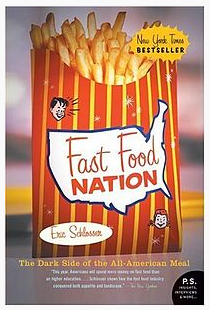


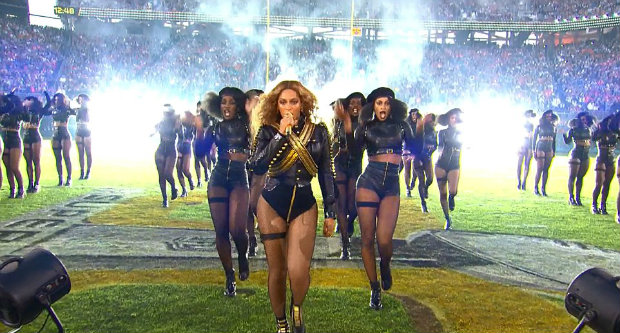


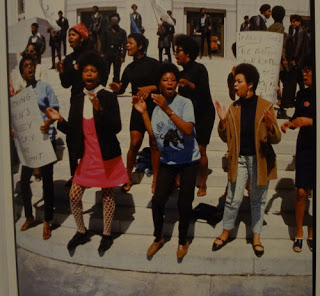
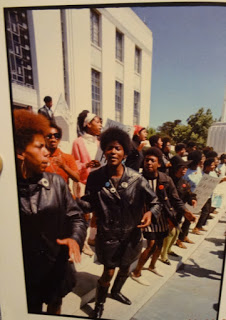







 decacsinc
Recent Comments